




PLANO, TX – By the time Christian Rodriguez stepped onto a football field for the first time as an eighth grader at McDonald Middle School in Mesquite ISD, he’d already lived in two countries, learned a new language, watched his mother go to federal prison, and discovered that structure could change a life.
He arrived fresh out of military school in San Marcos and walked onto the field for the first day of padded practice with a bravado and toughness earned through adversity.
Rodriguez was born to a young mother and an absent father in New York in the late 1970s. At six months old, he moved to the Dominican Republic to live with his grandparents, where he remembers playing on the beach and chopping sugar cane with a machete until he was reunited with his mom in America at the age of six.
Rodriguez didn’t recognize the poverty because it was simply the life everyone around him lived. But he does remember occasionally seeing a television that aired American TV shows and commercials that made him dream of reuniting in the States with his mother.
“It felt like America was a land of opportunity and the streets were paved with gold,” Rodriguez said. “I do vividly remember thinking to myself that going to the United States would be such a cool and awesome thing to do. So, when I was told that I was going back to the States to live with my mom, I was excited about the opportunity.”
But the transition wasn’t easy. Back in America, Rodriguez needed to learn English and his dyslexia made that a chore. He’d leave class three times a day for ESL and dyslexia training, leaving him open to teasing from the other kids in school. Rodriguez knew he was different. Learning English while managing dyslexia made him an easy target.
“I remember very early on thinking to myself, ‘I don’t ever want anyone to call me dumb or stupid or not intelligent,'" he said. "And it really helped drive me to do the very best that I could from an academic perspective.”
School wasn’t the only place that Rodriguez was facing hardship. His mother was sentenced to 27 years in federal prison for drug trafficking and Rodriguez was sent to military school at the age of 12. That military school, which was known as San Marcos Baptist Academy, is now known as San Marcos Academy (SMA).
“It wasn’t like I was super-duper heartbroken or distraught or that I felt like the world was falling apart across from me,” Rodriguez said of losing his mom to prison and being sent to military school in seventh grade. “It was kind of like, all right, I have to figure this out on my own. It almost flipped a switch in me that you’re responsible for who you’re going to be and where you’re going to end up.”
Rodriguez flourished in the academy’s structure and clearly stated expectations. He also embraced the academy’s straightforward reward system. If he went to bed on time, made his bed correctly, and met the week’s expectations, he earned the right to order pizza on Friday nights.
His life, to that point, had been anything but structured. From then on, it would become the defining characteristic of who he was. So when he moved to Mesquite to live with an aunt before eighth grade, football felt like a natural fit. The sport offered the two things he valued most from military school: structure and teamwork.
"That structure was what really drove me to it," Rodriguez said. "The other thing about military school that had parallels to football is that we were all in it as a team. We won together and we lost together."
Rodriguez's introduction to football came with a memorable welcome. During his first padded practice at McDonald Middle School, he lined up as the ball carrier in a pursuit drill, assuming defenders would simply tag him before moving to the next rep.
"To make an example of me, I got blasted," Rodriguez said with a laugh. "I was running and thought they were going to touch me and move forward, but I got hit so hard. They graciously welcomed me to eighth-grade football."
He made the B-team, a blessing in disguise because it gave him valuable playing time while he learned the sport. But away from the field, stability remained elusive.
Over the next two years, Rodriguez bounced between relatives' homes and even spent time living with a classmate's family. He wasn't getting into serious trouble, but he pushed boundaries, ignored curfews, and tested the patience of the adults trying to help him.
"I was a knucklehead," Rodriguez admitted. "I didn't have an appreciation for what they were doing for me. Looking back now, I know I didn't show the gratitude that I should have."
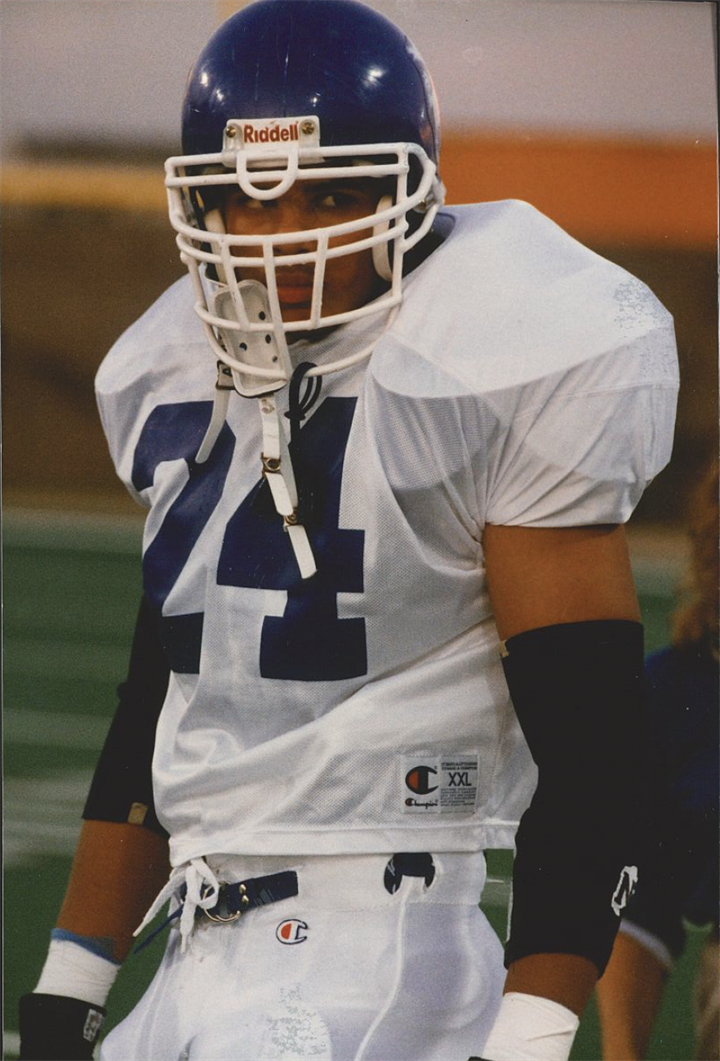
Frustrated and searching for consistency, Rodriguez even considered returning to the Dominican Republic. Since coming back to the United States as a child, he had lived in six or seven different homes. The structure that had helped him thrive at military school seemed impossible to find again.
That changed when North Mesquite head coach Mark Elam called Rodriguez into his office.
Without signing a contract or putting anything on paper, Elam offered Rodriguez a place to live for his junior and senior years—and a vision for what his future could become. If Rodriguez committed himself in the classroom and on the football field, Elam believed he'd earn the chance to play college football.
Like the Friday night pizza he earned through discipline at military school, Rodriguez once again had a clear set of expectations—and something meaningful to work toward.
"He saw something in me that I didn't see in myself," Rodriguez said. "He saw that I could be someone that could still grow and develop and possibly get an opportunity to go to college and play football. At that time, as a sophomore, I wasn't thinking about college. That's when my life changed."
Rodriguez helped North Mesquite win back-to-back district championships as he became one of the best outside linebacker recruits in the state. As a top-five percent graduate, Rodriguez attracted scholarship offers from Stanford, Rice, and Northwestern.
Rodriguez remembers his official visit to Stanford when then-head coach Tyrone Willingham sat him down and drew a line on the dry erase board. He put the number zero on the far-left side of the line and 74 on the other side, which represented the average age of death for an American male.
Willingham asked Rodriguez how old he was. When he answered 17, Willingham marked that on the line. He then marked where 21 would fall on the timeline, which is how old Rodriguez would be after graduating from Stanford. And then he put a dash at 24 because the average length of an NFL career was 3.2 years.
That left 50 years between 24 and 74. The quality of those years, Willingham said, would be determined by how seriously Rodriguez took his education.
For the first time since military school, Rodriguez had found a sense of family. He wanted his college experience to mirror that and he found it at Texas A&M under head coach R.C. Slocum, who told Rodriguez about his own struggles growing up on the wrong side of the tracks in Orange, Texas, and how football allowed him to become the first person in his family that attended college.
“I needed to be at a university and in a football program that felt like family. After living with Coach Elam for two years and knowing how great that was for me emotionally, spiritually, and physically, I wanted to find a place that could continue that feeling. And out of all the schools that I was thinking about, I got the biggest sense of family at Texas A&M.”

Rodriguez earned two degrees and was a four-time All-Academic First-Team All-Big 12 member during his five years in College Station. He busted onto the scene as a redshirt freshman when he forced a sack-fumble on Florida State’s Chris Weinke in the Meadowlands during his first collegiate game. Rodriguez tackled three Heisman Trophy winners during his career – Weinke, Ricky Williams, and Eric Crouch.
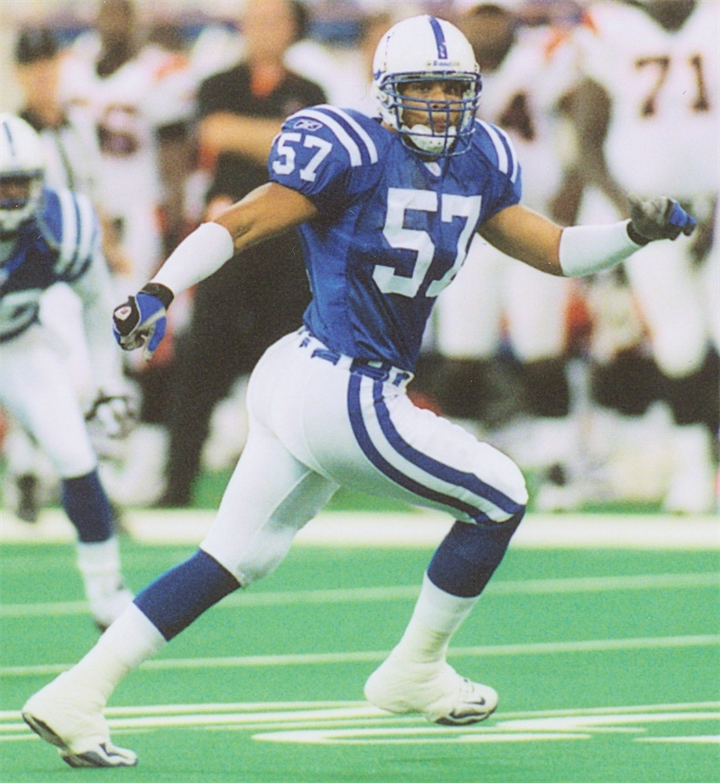
He was part of the 1998 team that won a Big 12 Championship. As a senior, Rodriguez tallied 15 tackles for loss, 7 sacks, and returned an interception for a touchdown, which earned him a shot in the NFL with the Indianapolis Colts.
When his short stint in the NFL ended when he was cut in 2002, Rodriguez faced a choice. His agent said that he could try out in the Arena League or in Canada, but when Rodriguez heard that the average salary was only $30,000, he decided to rely on his education and enter the business world.
For some athletes, the end of their playing career comes as a shock. Rodriguez was prepared. He hadn’t chosen to play for Willingham at Stanford, but he had never forgotten the lesson he learned on that official visit in Palo Alto.
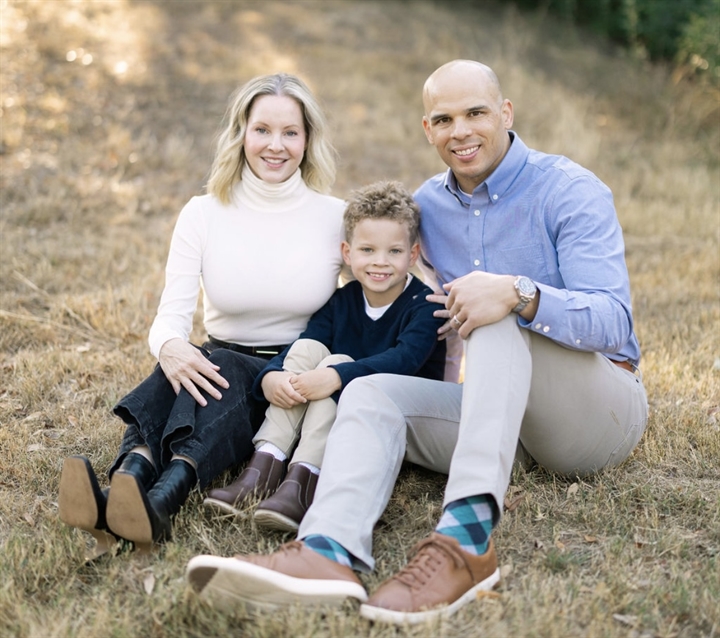
Rodriguez is now the Head of Wealth and Centralized Solutions at Charles Schwab, where he leads hundreds of employees Schwab clients across a broad range of wealth management needs.
Rodriguez spent much of his childhood searching for structure. Today, he creates it – for himself, for his family, and for the hundreds of employees he leads. The lessons learned in military school, on the football field, and in Coach Elam’s home still guide him decades later.
“I was blessed to have people come into my life that were willing to help me achieve goals and that also emphasized the importance of academics and athletics," he said. "For that, I am grateful.”
This article is available to our Digital Subscribers.
Click "Subscribe Now" to see a list of subscription offers.
Already a Subscriber? Sign In to access this content.
 Don't Miss Any Exclusive Coverage!