




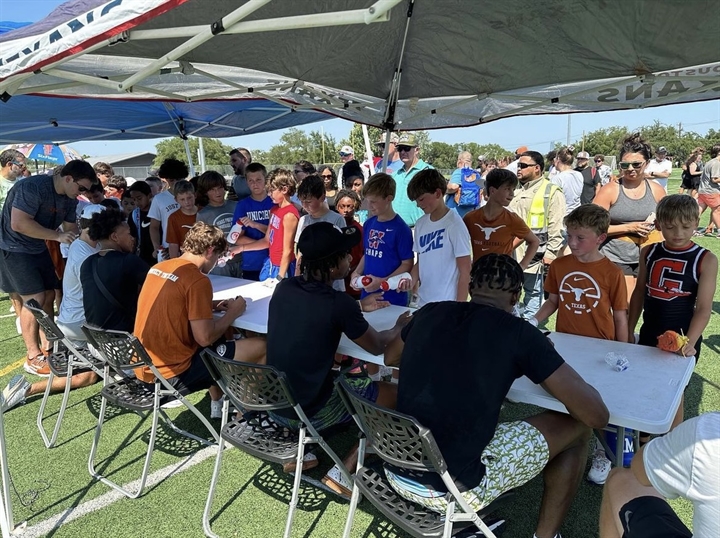
Roughly 120 aspiring athletes from ages eight to 12 jogged with a smile around Chaparral Stadium at Austin Westlake High School, a swarm of burnt orange shirts hopping from drill-to-drill in the searing June heat coached by one of their Texas Longhorn heroes after another.
On one end of the field, Roschon Johnson demonstrated how to plant and cut through a running back drill with the precision he’d displayed over a stellar four-year career that earned him a contract with the Chicago Bears. Defensive lineman Moro Ojomo, recently drafted by the Philadelphia Eagles, slapped high fives. Five-star freshman quarterback Arch Manning warmed up his arm tossing with campers.
Peter Mpagi bounced all over the turf with a whistle in his mouth, overseeing his brainchild that had come to fruition. Before Saturday, the kids running with Johnson and throwing with Manning probably hadn’t known who Mpagi was. But he'd provided them this opportunity. Mpagi had connected with his 18 other teammates to coordinate a time on Saturday, June 24 when they could all give back to the community like this. He had circulated the camp’s flier all over social media and decided all proceeds from the $50 entry fee would go straight to the American Heart Association.
Mpagi was around these kids’ age when he first fell in love with the University of Texas. He spent his preschool years in Uganda and knew next to nothing about football at the start of elementary school. But his childhood best friend had recruited him to play on his dad’s team, and that dad happened to be a UT graduate. Mpagi spent every Saturday after his little league games watching the Longhorns on TV at his friend’s house until he adopted them as his team.
Then he grew up into a star football player at Richmond George Ranch High School, a coveted four-star defensive end with offers to play Division I football all over the country. He earned a scholarship in the summer before his senior year to Texas and committed on the spot, a lifelong dream fulfilled.
“Playing football at Texas was my true passion,” Mpagi said. “Putting Texas on your chest and running out and playing in front of everyone, that was my true goal.”
He never played a down in a Texas jersey.
Mpagi is 22 years old and still has the frame at 6-foot-5-inches, 230 pounds that made him a once-future college football star. At first glance, it’s impossible to tell his journey over the past four years didn’t include Big 12 football games. Those years were spent in and out of the hospital, on a ventilator, walking around for nine months with an IV drip hooked to his arm, undergoing a heart transplant and learning how to eat, walk and breathe again.
“I think the hardest thing is giving up a dream you never got to achieve,” Mpagi told KVUE in Austin. “I’ve had a lot of goals that I’ve planned for myself. I can’t go to the NFL anymore. I can’t play football anymore. That was pretty hard on me. I think staying near the game is what keeps a smile on my face.”
Mpagi had provided triple-digit kids with a core memory. For him, it was the beginning of his new relationship with the sport he still loved.
…
Most Division I football prospects have a reputation that precedes them even in their early high school years, a dominance on the sub-Varsity level that signals greater things to come. Before Peter Mpagi’s sophomore year, he wasn’t even on George Ranch defensive coordinator Anthony Davis’s radar.
“I’m dead serious; I don’t remember his freshman year much at all,” Davis said. “But then it’s like, ‘Who’s this 6-foot-5-inch kid?”
Mpagi started the year on JV, but Davis’ defense struggled as the season wore on. After an opening-game shutout against Weslaco, George Ranch surrendered an average of over 26 points in the next four contests. The coaches couldn’t overlook the hulking sophomore defensive end any longer.
“We ended up bringing him up to varsity after a few games, and it was strictly passing situations,” Davis said. “If it was third-and-long, Peter knew he was going in and some other kid was going out. I think he ended up getting three sacks in that game.”
Despite the breakout performance, Mpagi and Davis knew the sophomore had to refine his technique. Mpagi’s sister was a long and triple jumper at Texas, and his inherited athleticism was evident. But he was raw as a player, having always relied on his superior size to overpower defenders throughout peewee and middle school football.
“As a kid, I never practiced anything outside of practice,” Mpagi said. “I wasn’t that kid that would go get extra work in by myself. If anything, when I was a kid, I just wanted to be a punter to be honest. I just liked kicking the ball. I never really did any of that technical stuff.”
Davis taught Mpagi how to use his hands to build a repertoire of pass-rushing moves and flip his hips to unlock the explosion necessary to blow past an offensive tackle. The defensive coordinator even crafted Mpagi’s sophomore year highlight tape and started connecting him to college coaches and high school prospect camps where he could get exposure.
“I went to a lot of camps during the summer and that’s what got my name out there,” Mpagi said. “Because any time I went to a camp, I would make sure to go against the flashiest dude to catch a coach’s eye.”
He boasted over 20 offers in the summer before his senior year following an explosive junior campaign where he recorded nine sacks. But there was only one school he wanted to go to. Mpagi’s bedroom was painted burnt orange, and there was a Texas Longhorn sticker he’d placed next to his bed where his head would rest every night. It was a constant reminder of where he wanted to play football and the effort required to reach that point.
Ironically, Mpagi was visiting Texas A&M when he got a call from Oscar Giles, then Texas’ defensive line coach. Giles told him the coaching staff was going to meet and decide whether or not to offer him. Mpagi would soon have an answer on if the technical work with Davis, the camp performances and the dominant junior season had been enough to achieve his dream.
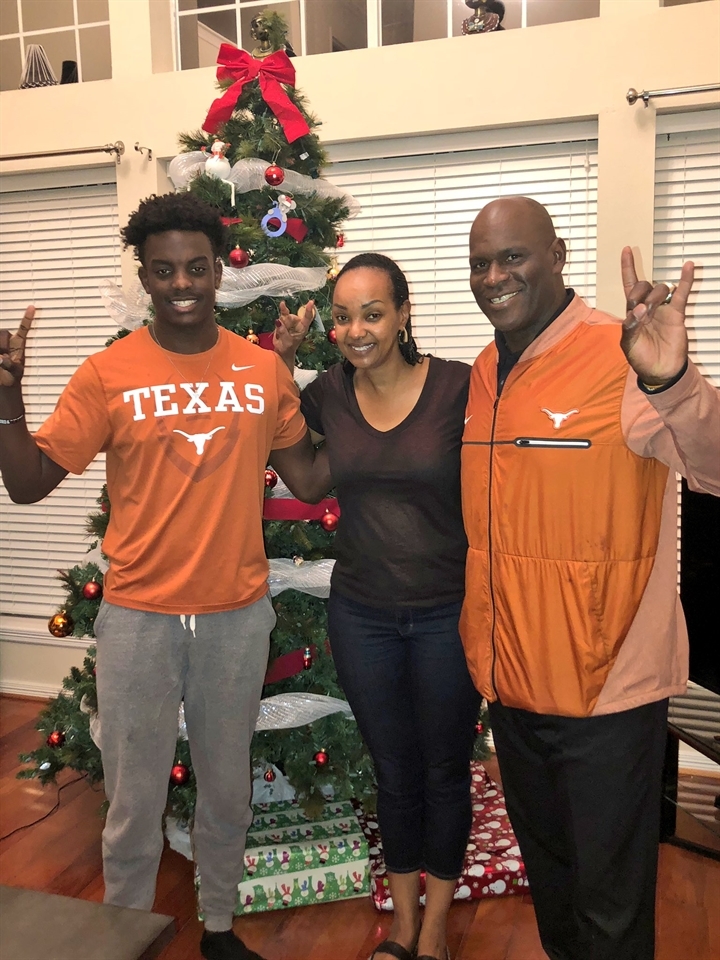
“I prayed that I’d get the offer because I really wanted it that bad,” Mpagi said. “I got home and they called me and they said they’re going to offer me and I was literally on the phone with them for an hour talking about it, and I remember I committed on the spot. There was no thinking about it. It was probably the happiest day of my life.”
…
While other kids his age were coasting through their senior year of high school in January 2019, Mpagi was on the scout team as an early enrollee at Texas banging heads rep after rep with first team all-conference tackle Samuel Cosmi, now with the Washington Commanders. He didn’t have a path to playing time as a freshman, but the scout team allowed him the opportunity to play without fear of messing up. Mpagi could measure his progress against the best Texas had to offer.
“I was always going against the first team o-line,” Mpagi said. “I told myself, ‘Next year’s my year. I know it because I’m going to be way better and put all this work in and I’m going to shine.’”
Anthony Davis, who moved from George Ranch to Bryan ahead of Mpagi’s senior year, watched from afar as the former lanky and technically unsound defensive end morphed into a 250-pound physical specimen wreaking havoc in Texas’s spring game.
“I start seeing pictures on Austin American-Statesman or 247, and he’s starting to look the part,” Davis said. “Then he does the spring game and he has a good spring game. I think he ended up getting a sack. He’s rolling with the twos and he’s getting reps. That’s the big thing. I knew the athletic ability was there, so if they could get the strength at all, he would blow up.”
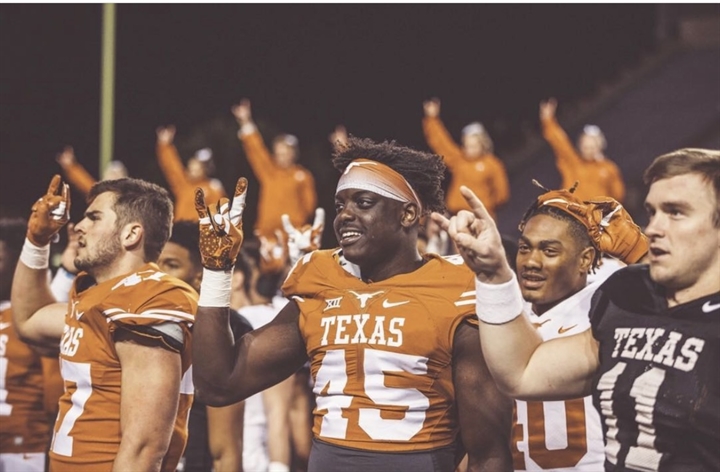
But the strength that got Mpagi to Texas rapidly waned in the fall of 2019. A mysterious illness derailed his progress in earning a starting spot for the next season. The players weighed in daily, and Mpagi lost ten pounds in just a couple of days. He was given an inhaler, which momentarily helped, but he was still constantly fatigued.
One day in practice, the Longhorns conducted a modified Oklahoma drill where players would get in the chute and try to drive each other back. Mpagi went in for his first rep and got pushed around easily. Trying to shake it off, he got back in for another go and got manhandled. But this wasn’t just the case of a young freshman struggling to get acclimated to the college game. Mpagi was getting his ass kicked. Something felt wrong.
Mpagi went to the doctor and was diagnosed with cardiomyopathy. In this condition, the heart muscle cannot pump blood effectively throughout the body, resulting in low energy. In Mpagi’s case, it was because his heart was enlarged.
The diagnosis shocked a man who’d been in peak physical health his entire life. The only injury he’d ever suffered in football was a sprained ankle his senior year of high school. Since he was still so young, the doctors said there was a chance his heart could return to standard size. But his football journey was on hold for six months at the bare minimum.
Mpagi had been given a taste of Texas Football. Now, his freshman year was already over. He couldn’t travel with the team anymore, instead confined to his dorm room while watching Snapchat stories of his teammates goofing off without him in the hotels. He missed the joke-cracking in the defensive line film room. Mpagi admittedly closed himself off, refusing to share with anyone the severity of his condition. But that meant teammates almost envied him for getting to skip workouts, unaware of the anguish Mpagi was going through.
“I would say mentally that was the worst part of my life,” Mpagi said. “They’d be like, ‘Oh, you’re so lucky you don’t have to wake up at 5:00 a.m.’ In my head I’m like, ‘Well, it’s different when you’re on the outside looking in.’ You literally can’t do anything at all. You have no control.”
…
Peter Mpagi got the Bible verse Jeremiah 29:11 stitched on his high school varsity jacket.
“For I know the plans I have for you,” declares the Lord. “Plans to prosper you and not to harm you, plans to give you hope and a future.”
Mpagi comes from a deeply religious family. Yet when he was thrown into the heat of college football his freshman year, Mpagi says he stopped reading his Bible as much as he did in high school. The heart defect and COVID-19 pandemic brought him back home and into God’s word.
His mother, Ruth Katto, would lead Mpagi and his sister through Bible study every Tuesday and Thursday night while they were in her house. Katto would phone her friend in Uganda, who had introduced her to group prayers, and the four would say them together. Jeremiah 29:11 was once again the verse that stood out for Mpagi. His plan included football stardom, but now Mpagi needed to trust God’s plan for his future, which increasingly looked like it wouldn’t have that.
“We’d sit down and we’d pray,” Katto said. “It helped him to realize through all the Scripture that we read through that sometimes you want something this way, but that’s not how it’s going to happen. You might want that, but that’s not what God has prepared you for.”
In June 2020, Mpagi had a phone call with Texas’s head athletic trainer. His heart hadn’t improved, so he needed to medically retire. Even though Mpagi was working on trusting God, he still couldn’t fathom not running out of the tunnel at Darrell K. Royal-Texas Memorial Stadium. He’d been blessed with a scholarship to Texas; but his college career was over before it started.
“That kind of hit me hard, and I didn’t even accept it at that time to be honest with you,” Mpagi said. “I just said, ‘Well I’m going to prove you wrong. I’m going to come in and unretire.’”
His determination couldn’t overcome a failing heart, and the COVID summer that bled into the fall of his sophomore year brought even more setbacks. Mpagi had what he describes as a mini-heart attack with severe chest pain that made him rush to the doctor. He’d return to the hospital twice because he couldn’t stop throwing up in his dorm room. There were nights he couldn’t even sleep on his side because he couldn’t breathe, instead having to sit upright just to get some rest.
But the almost two-year-long COVID break allowed Mpagi ample time to process that he couldn’t play football anymore. He came to grips with the fact God’s plan had differed from his lifetime goal. By his junior year in 2021, he was on the sideline for every home game, cheering on the teammates he once trained with.
He also continued working towards his degree in sports management. He attended all his classes online during the pandemic and walked around with an IV drip on his arm because his heart was too weak to function without it.
“I keep telling him, ‘Son, I know you’re going to get what you want, because for somebody who’s been through what you’ve been through, another person would have said, ‘Let me take a year off while I get myself better,’” Katto said. “But nothing stopped him.”
He’d finally gotten comfortable with his new reality when it was again altered. In July 2022, Mpagi went unconscious and was rushed to the ICU. When the doctors ran tests, they found Mpagi had too much water in his heart. At 21 years old, the Division I athlete needed a heart transplant to survive.
And the donor had to be the same height and weight as the 6-foot-5-inch, 230-pound Mpagi.
Mpagi had to stay in the hospital waiting for a new heart, his mother by his side almost every moment when she wasn’t at her job. Nurses and doctors would come in and tell them they might be there for six months waiting. Or that sometimes it could take up to a year. Some people made a trip to the operating room for the transplant surgery five times only for the doctors to realize the heart wasn’t a match.
But Mpagi didn’t have that time. He threw up anything he tried to eat for two weeks in the hospital. His mother prayed with him by his bedside. They would not, they could not wait six months. The first heart they got needed to be a match.
“The worst thing is you’re not only sitting in the bed, you have a machine that is helping support your heart,” Katto said. “Here is somebody who’s never been sick, and you’re in the hospital bed waiting for a heart transplant.”
By day 36, both Mpagi and his mother were struggling. Mpagi was in failing health, while his mother was near an emotional breaking point going back and forth from work to the hospital where she looked after her son, who was once so physically strong. They needed God more than ever.
“I was driving to the hospital and I said, ‘Lord, now this particular day, Lord this is too much for me,’” Katto said. “‘I am so overwhelmed with all these emotions.’”
She got to the hospital that day with her emotions weighing so heavily that it caused physical exhaustion. She told her son she needed to nap and lay down on the couch in the hospital room. She silently lifted the prayer once again. This was too much. She was overwhelmed. Then the phone rang. The doctors had found a heart.
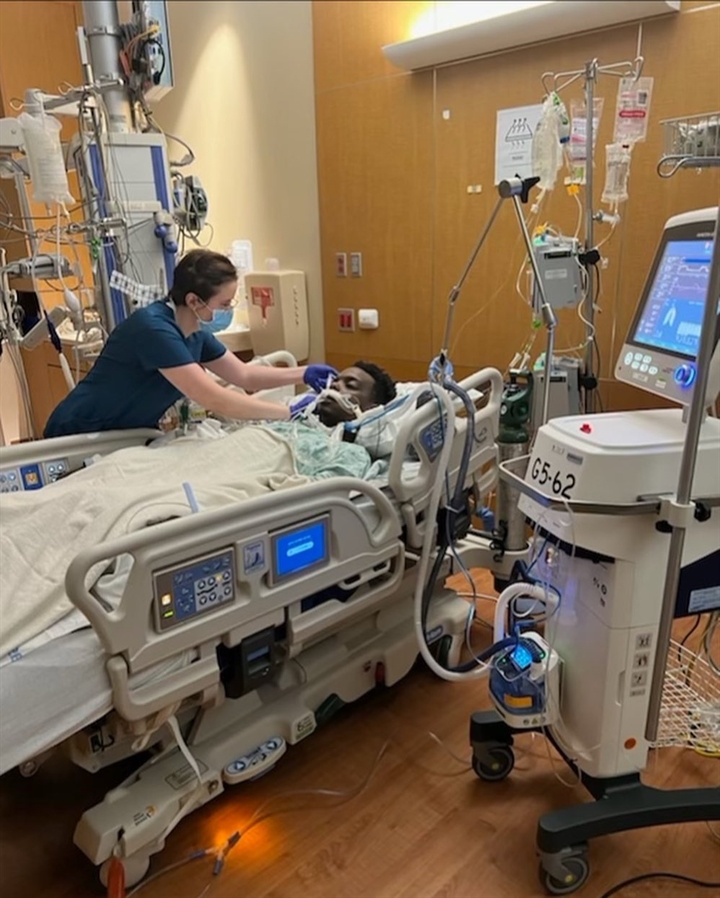
On August 25, 2022, Peter Mpagi underwent successful heart transplant surgery. In a period where he should have been gearing up for his senior season-opening game with Texas, he was relearning the physical movements he once took for granted.
“I had to learn how to eat, drink and breathe again,” Mpagi said. “That was the roughest part. I remember after I got the heart transplant I had no strength at all. They put me in this chair that electronically lifts you up and puts you on the chair. So that part was really hard on me. And I just felt so weak at that point.”
Mpagi won’t be able to know the identity of the man whose heart he now has until a year removed from the date of his surgery. When that date comes, he’ll send the family a letter to connect with and thank them. They’ll have the choice whether or not to respond. Mpagi hopes to meet with them in person.
“Their son gave me a second chance in life,” Mpagi said. “They help me live on and help my legacy live on. I’m very grateful for that because if it wasn’t for them I probably wouldn’t be alive right now.”
The rehab from his surgery lasted two months. Once completed, he was permitted to return to the sidelines to finish out his senior year wearing the Texas jersey he’d earned.
…
Over 104,000 screaming fans were packed inside Darrell K. Royal-Texas Memorial Stadium for the No.18-ranked Longhorns’ battle with undefeated TCU. Yet amid the chaos, Peter Mpagi solely focused on Texas assistant Gary Patterson.
Patterson, who’d built TCU’s program over 22 years and still looked out-of-place to most fans in a burnt orange visor, studied his former team’s formation as they lined up. Then, Patterson started frantically getting his defense’s attention.
“Coach Patterson literally called out a play,” Mpagi said. “He was like, ‘This is a read option!’ So I want to be a defensive mastermind like him. I think it’s pretty cool that you can know what’s going to happen. I want to be able to do that one day.”
Mpagi can’t play football anymore but still wants to impact the game.
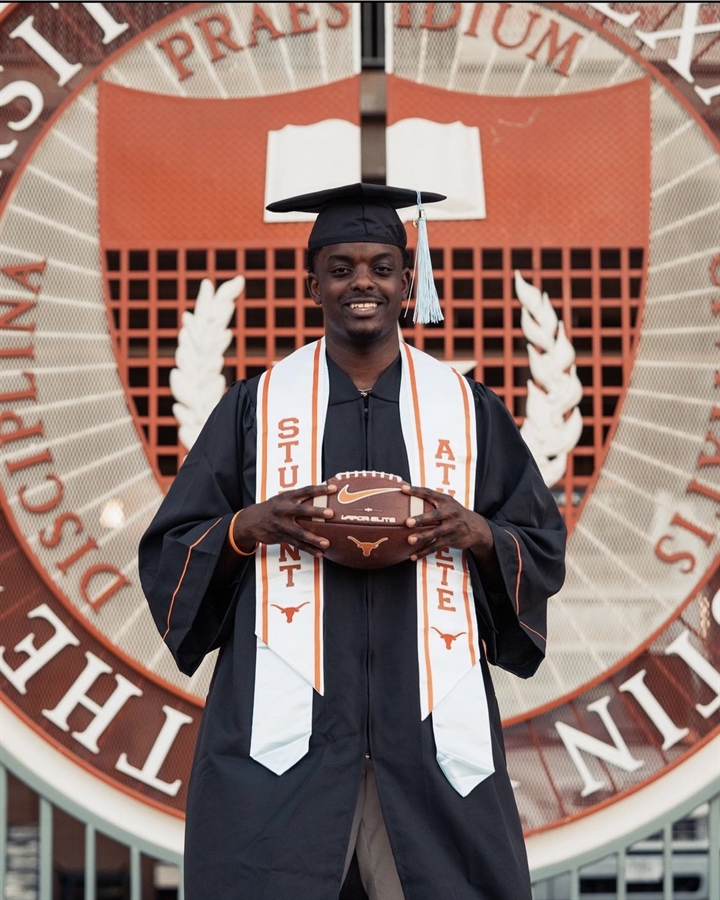
Upon graduating in May, he connected on LinkedIn with Patrick Johnson, the co-founder of Vantage Sports. Johnson had started the company a couple weeks after Name, Image and Likeness legislation for college athletes rolled out in July of 2021. Johnson signs college athletes to Vantage to coach one-on-one sessions and group practices. It’s a way for the athletes to monetize their skills while passing on their knowledge to the next generation and also build an understanding of what it means to be a coach.
The two met for coffee in the Austin area and formed a close partnership.
“I was really impressed by his maturity and his story, the way he carried himself,” Johnson said. “He really seemed like he had a passion for wanting to get into coaching and tell his story and help out younger players. I was really impressed with him as a football player and as an individual.”
Ruth Katto, Mpagi’s mother, admittedly doesn’t know much about football. Therefore, when Mpagi was recruited in high school, she’d ask the coaches what made her son different from regular players. The college coaches who had spent their life studying the game of football would tell her that Peter could answer every quiz question they gave about formation and alignment while studying game film or the chalkboard.
Mpagi was robbed of four years of football and still has more to give to the sport. He knows his testimony can impact more as a coach than if he moved on into the corporate world. That’s why he’s working to become a graduate assistant to kickstart his collegiate coaching career.
“I’d rather be somewhere where I’m passionate and spread my story and inspire players to always be their best,” Mpagi said. “Never take any moment for granted, because it can really all change at one time and you’ll never know. I feel like my story can inspire people.”
Mpagi signed on as a coach during that coffee meeting, but there was a more extensive project he needed help on. He wanted to conduct a youth football camp with Texas players serving as coaches, and he had commitments from double-digit teammates. Once he announced the camp, there’d be no problems getting people to sign up to compete in front of Longhorn stars. But it was a large project logistically for Mpagi to take on by himself. That’s where Vantage came in.
Johnson already had insurance policies on some nearby football fields in the area. Vantage also had a website where they could book people for the camp. They set a date for June 24.
…
Peter Mpagi’s story didn’t go how he thought it would. Even in those first few months after the cardiomyopathy diagnosis, he believed he would be out on the field by his sophomore year. He thought he would have this great testimony as a young man who’d battled a heart condition and returned to compete at the only school he ever loved.
“In life, there are always setbacks, that’s inevitable,” Ruth Katto said. “We all have a setback here and there. But you have to look at what’s in front of you. What you want.”
Mpagi wants to be a football coach. He built himself up from a sophomore defensive end that wasn’t on any coach’s radar into a Division I prospect, and he knows what it takes for others to do the same. He never ran out of the tunnel in a Texas jersey, but he earned the right to do so.
“I tell that to the kid I train right now, ‘Always believe in yourself,’” Mpagi said. “Don’t let anyone tell you something you can’t do, because I’m sure not a lot of people expected me to go to Texas. But funny enough I believed in myself that I could do it and that’s what I was able to do.”
Mpagi’s youth football camp raised $6,000 for the American Heart Association. None of the Texas football players who came out to coach Saturday made a dime. Some, like NFL players Moro Ojomo and Roschon Johnson, flew in from out of state. They needed to support Mpagi on his new journey with football. As a bonus, they also put a smile on 120 kids’ faces
“Maybe they can tell their kids’ kids, ‘Peter threw this camp for me and I met my favorite Longhorns because of him,’” Mpagi told KVUE on Saturday. “Whenever I pass away, I want to be remembered for the good things I’ve done in my life.”
He still has a whole lot of life to live.
This article is available to our Digital Subscribers.
Click "Subscribe Now" to see a list of subscription offers.
Already a Subscriber? Sign In to access this content.
 Don't Miss Any Exclusive Coverage!