



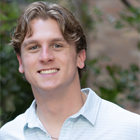
When Pete Fredenburg retired from Mary Hardin-Baylor in 2022, he had cemented his case as one of the most underrated Texas college football coaches ever.
The resume is astounding. Fredenburg started the Division III program from scratch in 1998. He compiled a 231-39 record and two national titles over 24 seasons. In that span, UMHB won more playoff games (47) than all other ASC teams combined.
But, somehow, four years after he hung up the headset, Fredenburg’s legacy only looms larger over Texas. The branches of his coaching tree are spreading across the state. In February, UMHB alum Lee Munn became the head coach at Southlake Carroll. Munn joins Austin Westlake’s Tony Salazar as a figurehead of Fredenburg’s second dynasty – this time in TXHSFB.
The more you look, the more Crusaders you find on high school coaching staffs. There’s Salazar and Munn, as well as Nixon Smiley head coach Paul Kirby. Lovejoy defensive coordinator David Branscom is a UMHB man, as is new Southlake Carroll DC Brian Sides. Not to mention Grapevine offensive coordinator Derek Sides, Brock defensive coordinator Jordan Mullinnix, and Sulphur Springs offensive coordinator Peter Medlock. We’ll cut it off there, because this entire article could be a list of coaches with ties to UMHB.
Why does this tiny, private Baptist university, with fewer than 4,000 total students, have such an outsized impact on the TXHSFB coaching world? Dave Campbell’s Texas Football spoke with Fredenburg, Salazar, and Munn to find out what made a successful UMHB football player, and how those traits have made them successful coaches, too.
“When you play Division III football with no scholarships, you’ve got to have a strong desire to continue to play,” Fredenburg said. “You’ve got to love the game. It’s just part of your DNA, and they were that way.”
The seeds of Fredenburg’s coaching tree were sown in the early 2000s with the type of high school players he recruited. Over nearly two decades as a DI defensive coordinator at Baylor, LSU, and Louisiana Tech, there were certain measurables a player had to have to get a serious look. Once he arrived at UMHB, Fredenburg threw every metric out of the window except one.
“We didn’t say you had to be this height or this weight or speed,” Fredenburg said. “But we wanted the coach to rave about them. Everybody that we recruited was probably the head coach’s favorite.”
That’s how Fredenburg signed Tony Salazar, a four-year varsity starter from Dripping Springs whom every other college program deemed too small to play safety. Salazar roomed with Fredenburg’s son, Cody, all four years of college. By his senior year, Salazar was an AFCA All-American and the conference’s Defensive Player of the Year.
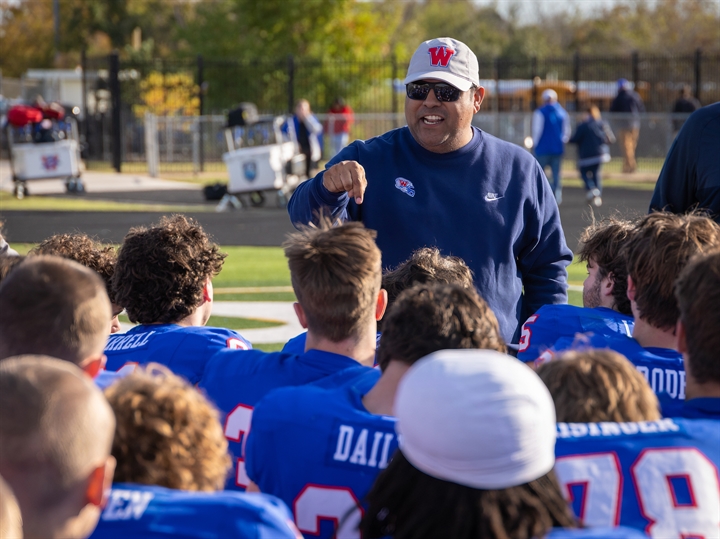
Fredenburg jokes (kind of) that Salazar and Cody had no choice but to go into coaching. Salazar says he didn’t want to do anything else after attending postgame parties the Fredenburgs held for all the coaches’ families. The UMHB staff was full of legendary coaches who were nearing retirement but still had the itch for a couple more seasons. Former Tyler John Tyler state champion and Baylor defensive coordinator Corky Nelson was an assistant from 1999 to 2003. Offensive coordinator George Haffner (1999-2005) was Johnny Unitas’s backup on the Baltimore Colts and both Tony Dorsett and Herschel Walker’s offensive coordinator for their Heisman campaigns.
“We kind of got that old soul early as players,” Salazar said.
Salazar immediately transitioned from player to graduate assistant while working on his Master’s. Hungry to prove himself, he hit the phones seeking the most overlooked and gritty high school football players he could find. That search led him to Omaha Paul Pewitt High School and a senior safety named Lee Munn.
“He was the first person who ever contacted me from UMHB when I was a senior,” Munn said. “I grew up in northeast Texas, so I never even heard of the school. I didn’t even know where Belton, Texas, was. He was the guy who got me there.”
Munn’s journey as a player and coach is almost a carbon copy of Salazar’s by design. For starters, they both played the most important position on UMHB’s football team: the punt protector.
Fredenburg was UMHB’s defensive mastermind. Sometimes, he’d get an epiphany about a new coverage at 3:00 a.m. and be in the fieldhouse on the whiteboard by 3:15 a.m. But on game day, he was the team’s CEO. The only unit he coached himself was the punt protection team. As Salazar puts it, if you get a punt blocked, you’re gonna lose the damn game. Who better to take accountability for that than the head coach?
The quarterback of the punt protection unit was the ‘searchlight,’ the upback who shifted the team’s protection based on where the rush was coming. Being named the searchlight was Fredenburg’s ultimate seal of approval, and Salazar and Munn are part of the elite fraternity of players who accomplished it.
“I don’t even know anybody on the UMHB team right now,” Salazar said. “But I promise you that guy right there is probably one of the most trusted guys on the football team.”
Salazar and Munn also became graduate assistants at UMHB immediately after their playing careers ended. Because DIII football regulations and the school’s budget limited the number of full-time employees the coaching staff could have, GAs took on more responsibilities at a younger age.
Since UMHB had a JV team that played games on Monday nights, Salazar got game reps as a defensive coordinator in addition to coaching the varsity defensive backs. The young coordinators had the freedom to call whatever they pleased, but they’d have to answer for it in a postgame debriefing with Coach Fredenburg, who watched every JV game from the press box. One of the biggest butt-chewings Salazar ever saw was when the offensive GAs decided to run a halfback pass play they’d drawn up in the dirt.
Munn got to be a position coach while still a GA, teaching the defensive ends. That experience forced him to grow quickly as a coach. He was coaching a foreign position after playing safety in college. That foreign position was also Fredenburg’s baby, because he’d started his career as a defensive line coach.
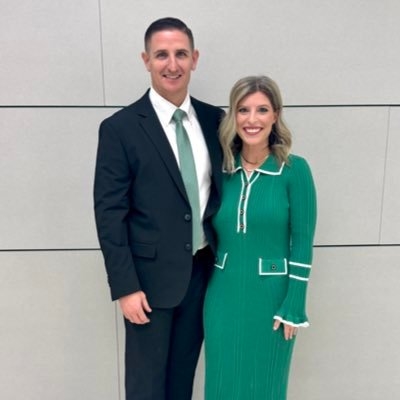
By the time Salazar and Munn were done playing and coaching at UMHB, they’d earned football doctorates.
“You learn pretty quick when you sit in and meet with Coach Fredenburg, Coach (Larry) Harmon, and David Branscom that you really don’t know football,” Munn said. “You knew what you knew, but at the end of the day, they were so much above what I knew coming in.”
After his GA tenure ended, Munn believed he’d become a college strength and conditioning coach. Then, Salazar phoned him again with an opportunity that changed the course of his life – becoming a defensive assistant at Marble Falls High School under Todd Dodge. If Munn went to UMHB because of Salazar, he also became a TXHSFB coach because of Salazar.
“I would not be here without Tony Salazar,” Munn said. “He’s my mentor. If I have any questions, he’s going to be my first phone call. The steps that I’ve taken, he’s already done.”
In fact, Salazar is also an indirect reason Munn became the coach at Southlake Carroll.
Eight years ago, when Salazar and Munn were at Austin Westlake together, Salazar fielded a call from new Southlake Carroll head coach Riley Dodge. Riley desperately needed a defensive coordinator. No, he wasn’t trying to poach Salazar from his father’s staff, but did Salazar have a candidate in mind?
Salazar did have a guy, in fact. But every fiber in his being screamed at him not to say it. Salazar guesses his pause must’ve lasted ten seconds, but every second feels like an hour when you’re wrestling with the option of what you want to do versus what you should do.
Salazar knew Todd Dodge was close to retirement, and he was likely the head coach-in-waiting at Austin Westlake. He couldn’t help daydreaming about what his staff would look like, and there was only one defensive coordinator he pictured with him. But Salazar wasn’t a head coach yet, and Lee Munn, his young assistant, was ready now.
“It was my hope once upon a time that Lee was going to be my defensive coordinator when I was a head coach,” Salazar said. “I just couldn’t hold onto him long enough.”
Instead, two Fredenburg disciples are now spreading the coaching philosophy they learned in small-town Belton at two of the state’s most decorated Class 6A powerhouses in Dallas Fort Worth and Austin.
“That’s one thing I’ve probably taken away the most: I’m going to see the best in our kids,” Munn said. “Whether they’re a freshman or B-Team player. ‘What can you be when you give us your best?’ That’s the standard we’re going to hold you to.”

This article is available to our Digital Subscribers.
Click "Subscribe Now" to see a list of subscription offers.
Already a Subscriber? Sign In to access this content.
 Don't Miss Any Exclusive Coverage!