




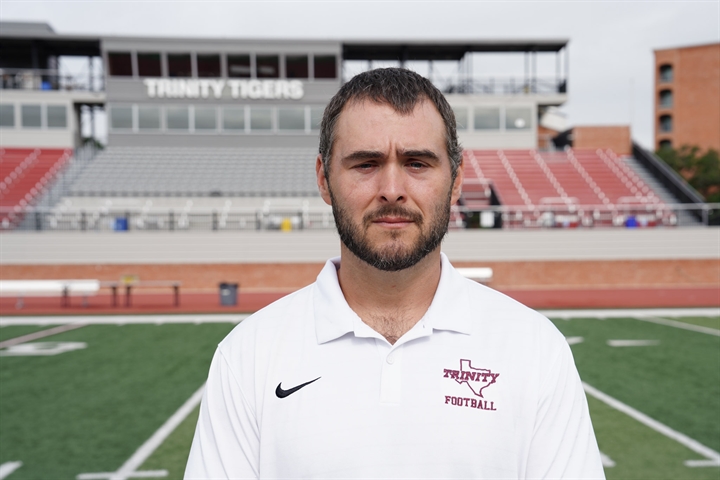
SAN ANTONIO — Wade Lytal grew up as the oldest of three brothers and the grandson of a longtime football coach in Texas. He grew up playing multiple sports, even winning a silver medal in roller hockey at the Junior Olympics.
Lytal eventually became too big for the other sports and gravitated to football. He played offensive line in high school at Houston Memorial before becoming a three-year starter and two-time all-conference selection during his playing days at Trinity University in San Antonio. He immediately became a coach once his playing days were over.
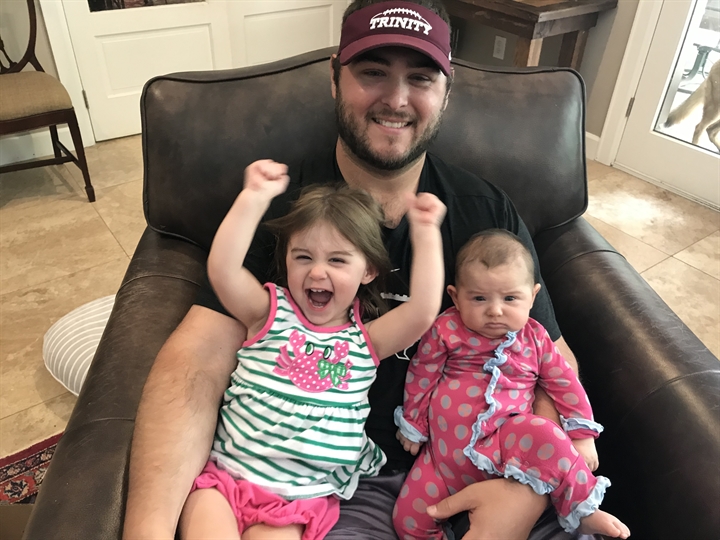
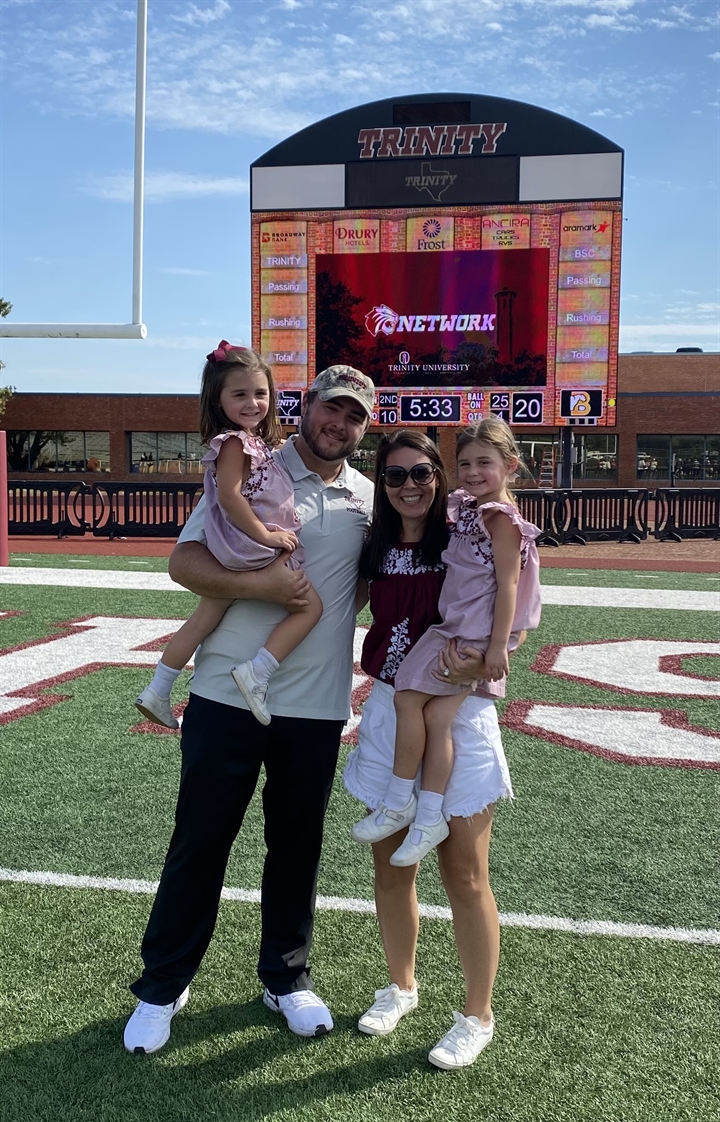
That was Lytal’s life until 2017, when he and his wife, Malorie, had a daughter, Kellyanne. A few years later, the couple had a second daughter, Emmalynn.
“Everyone thought I’d want boys because I’m a football coach,” Lytal said. “But I wanted girls. I have an army of 18- to 22-year-old boys that I get to work with every year and pour into. I get to be around the ultimate competitive and physical sport and then go home and be around dolls and helping them with their makeup and trying on dresses.”
Kellyanne had blossomed into a talented softball player who dreamt of being a cheerleader for the Alamo Heights Mules and then at the University of Texas, where Malorie earned her master’s degree. She attended Trinity games in full cheerleading uniforms and watched intently as her father led the Tigers offense to conference titles and Division III playoff appearances. She loved Taylor Swift and the color blue.
Kellyanne’s mom and aunt attended Camp Mystic, a family tradition. They had dreamed that their daughters would all go to camp together. The camp required attendees to be at least eight years old and to have completed second grade. At long last, Kellyanne passed those milestones in May of 2025, just in time to attend for the first time that summer.
But that dream ended in a nightmare. A text message in the early hours of July 4 woke up Malorie and changed the family’s lives forever. Flood waters from the Guadalupe River had swept through the campgrounds. A mom of another Camp Mystic camper housed in the Twins I Cabin notified the group chat that her daughter was just rescued from the river a few miles downstream from camp.
But the Lytals had no such information about Kellyanne. She was missing. Her body would not be found for another week.
Trinity head coach Jerheme Urban had seen football help carry someone through unimaginable loss before. He believed it could do the same for Lytal.
"I knew that Trinity football was something that Wade was going to need and that we would need Wade."
***
When Lytal was a high school offensive lineman with a dream of playing college ball, recruiting questionnaires were sent via mail. Prospective players would fill them out and send them back to college programs hoping to get an invite to camp or a look from a coach.
Lytal had a D1-or-bust mentality and was walking to the trash can to throw away a mailer from Trinity when his father, James, interjected and told his oldest son not to close any doors. Lytal listened. He filled out the form, and as his recruiting process continued, he realized that Trinity was the right fit.
“Trinity ended up becoming home,” Lytal said. “It gave me the best opportunity, I felt, to get the best degree I could and to play the most football that I could, because I wanted to play. So, it was the perfect school at the perfect level.”
Staying close to home at Trinity also allowed Lytal to pursue another dream – Malorie. The two first met when they were 11 years old. And while Lytal admits he always had a crush on her, the pair were only friends through middle school, high school, and college.
In 2009 while student coaching at Trinity and getting his master’s nearby at UTSA, he finally took a chance and asked Malorie out while she was getting her master’s degree at Texas. The two started dating, mostly meeting at halfway points along I-35 like in Gruene.
Lytal was offered a full-time position as the offensive line coach at Illinois College in 2011, a job he was introduced to by Trinity’s defensive line coach, Paul Michalak, who played for Illinois College head coach Garrett Campbell while he was a player at Carthage College.
The job at Illinois College, while putting hundreds of miles of distance between Lytal and Malorie, allowed Lytal to find his footing as a young coach and learn an offense that he would later get the opportunity to deploy at Trinity.
Coincidentally, the distance allowed a unique opportunity for James and his son to coach together, and eventually, spend more time with his first granddaughter. James was in his mid-50s, semiretired, and contemplating returning to full-time work when Lytal took the job at Illinois College. That was until he met Campbell, who asked James to come help coach the team.
James jumped at the chance, assisting with quarterbacks and tight ends during two weeks in fall camp and then during the season when he’d fly into town on Thursdays. He even upgraded Illinois College’s sideline communication devices and was able to stand on the sideline and listen to his son coach every Saturday. James never thought about returning to full-time work.
Lytal made the decision to return home and coach the offensive line at his former high school, Houston Memorial, in 2015, and he and Malorie married that same year. They welcomed their first daughter, Kellyanne, in 2017.
In 2018, before Kellyanne had reached her first birthday, Lytal accepted a job as the offensive coordinator at Trinity. But Malorie and Kellyanne didn’t move with him right away because there was more help in Houston and she had a great job, so they lived with James and Mary Beth for a couple of years while commuting to San Antonio for Trinity home games.
The good news was that Lytal was also the recruiting coach for the entire city of Houston, which allowed him to go back to Houston for weeks to months in the offseason to be with his family.
“I’m thankful that I stayed semiretired,” James said. “I probably got more time with her in those eight years than most grandparents get in a lifetime. It’s made the grieving tougher, but I cherish those years and memories.”
***
A year ago on the Fourth of July, with Kellyanne in the early days of her first time at Camp Mystic, Wade and Malorie Lytal were spending another holiday with James and his wife, Mary Beth, at their lake house in Austin, along with their youngest daughter, Emmalynn.
When Malorie jolted from her sleep because of that text message from a fellow camper’s mom, she immediately woke up Wade. They left Emmalynn with her grandparents and made the roughly two-hour drive to the Walmart in Kerrville that served as the original reunification center for campers, where they were first told that Kellyanne was unaccounted for.
Another reunification center popped up at nearby Ingram Elementary, so Lytal and Malorie raced over there and joined a growing number of parents in the gymnasium. Buses started showing up with rescued campers whose names were announced so that waiting parents could claim them.
Eventually, someone realized that the families with daughters still unaccounted for should be separated, so the Lytals went to the playground and began talking to other moms and dads who would eventually be known as the “Heaven’s 27 Families.”
“You feel like you’re in the Twilight Zone,” Lytal said. “You feel like it’s a horror movie happening around you.”
The scenes only grew darker. The remaining families were notified that no more buses were coming and many began fearing the worst. The Lytals headed to the morgue the evening of July 4 and showed them a picture of Kellyanne. She was not there.
They were still hopeful that she was just lost in the chaos or that someone had already found her and didn’t have cell service. Malorie joined a group of mothers who posted pictures of their daughters on social media with their cell phone number and a message to contact if found.
After the morgue, the families of the missing girls were moved to Trinity Baptist Church in Kerrville. Lytal and Malorie were the first to arrive.
“I just distinctly remember walking through the parking lot and hearing fireworks,” Lytal said. “I just remember thinking, ‘What is happening with our lives right now?’”
There, the Lytals, and the other families, received welcomed love and support from the congregation. With darkness arriving, there wasn’t much more that could be done on the Fourth so the families were told to come back the next morning for press conferences that would deliver more information.
They found a hotel in town and tried to rest. That rest never came. The Lytals were prank called the entire night. People were using the cell phone numbers placed on social media and telling the families that they had their daughters and could collect them for a fee. But the parents couldn’t turn off their phones or not pick up the calls, because what if the next one was real?
“I’m not sure how much we would’ve slept anyway, but we couldn’t sleep,” Lytal said. “It just added to the absolute devastation we were facing.”
Lytal and Malorie stuck around Kerrville for a couple of days. Urban and the rest of the Trinity coaching staff, as well as some administrators and athletes, brought in supplies and joined the search parties. After three or four days, the Texas Rangers took over and collected DNA from all the parents at the church.
As days passed, the Lytals returned to Austin to do the impossible: Tell Emmalynn that her older sister was not coming back from camp. A week later, the family received a call from the Texas Rangers and were told that Kellyanne’s body was found and that there was a DNA match.
“It was the absolute most unimaginable feeling of my entire life,” Lytal said of the phone call. “I was realistic enough to know that she had died. But the fact that they recovered her did provide this sense of relief, but it was confirmed that Kellyanne was never coming home.”
Alamo Heights PD sent a cruiser to Kerrville to escort the body back to San Antonio, where a funeral took place on July 26, the day Kellyanne was supposed to safely return home from camp.
The family was lifted by the remembrance of their 8-year-old daughter. Above all, they said, she was kind. She prayed every night for the homeless and for her family members in heaven. She was known to sit with the new girls at school so they didn’t feel alone at lunch or at recess. Lytal described her as the perfect blend of beauty queen and athlete. And the stories he’s heard about Kellyanne since her passing have only cemented those beliefs.
“It’s hard, it’s all awful, but what’s been uplifting is that there’s been a lot of people come up to me after the fact and tell me stories about her kindness,” Lytal said.
The entire time Lytal was in Kerrville, he kept looking at a picture he took in 2024 from a speech that Urban gave the team while they were struggling early in the season. The slide defined a real man as someone who rejects passivity, engages with an anchor, accepts responsibility, and leads courageously.
“You can take everything from a person except for their ability to respond the way they want to,” Lytal says.
***
In the months after Kellyanne died, Lytal was still trying to formulate that response, at least when it came to football. He thought about giving up play-calling. Coaching the offensive line felt manageable. Coming up with an entire offensive gameplan didn’t.
Urban was a rookie in the NFL with the Seattle Seahawks when quarterback Trent Dilfer lost his son in the offseason. He witnessed first-hand how the routine and refuge offered by a football locker room can help a person with unfathomable grief. Playing football didn’t heal Dilfer, but it sure helped. The two became lifelong friends.
So when Lytal called him a few weeks after the tragedy to tell him he could not call plays in 2025, Urban told him to tap the brakes and focus on his healing. He even put Lytal in touch with Dilfer to talk about their shared tragedy.
The initial plan was for Urban to call plays in non-conference, which would allow Lytal three weeks plus an idle date to get ready for the start of conference play in October.
But Urban had a hunch. He believed Lytal would not only want to return to normalcy as the offensive coordinator and play-caller for the Tigers, but that he’d need to. And Urban was right. By two or three days into fall camp, Lytal knew it, too.
Lytal called plays in the scrimmage against Blinn Junior College and told Urban after that game that it was first time he felt normal since July 4th. It was a three-hour reprieve from the pain and a trip back in time to when he, and his family, were whole.
“I knew nothing about grief. Not this type of catastrophic, unpredictable, not knowing it is coming type of loss,” Lytal said. “But I was thankful because one of the best ways I’ve been able to navigate my grief is being needed, and I’m not saying that Trinity football couldn’t win without me, but I’m a coach – the players need you, the program needs you.”
The regular season started on Sept. 4 with a trip to Texas Lutheran. Lytal put the pictures of the 27 girls who had passed away at Camp Mystic on his play sheet and helped the Tigers win, 26-14. After the game, he drove to Austin with his dad because the Heaven’s 27 Camp Safety Act bill was signed into law by Governor Greg Abbott on Sept. 5.

Football gave Lytal something he craved: purpose. He fell into a routine. He’d go out and coach practice, joke with the guys, and be the old Wade Lytal throughout the day while he was busy prepping and planning for the next game.
And then practice would end, the day would be over, and he’d feel a physical change that hit him all at once. He cried on the five-minute drive home from Trinity every day during the six months of the football season thinking about how much he missed Kellyanne.
“We are unbelievably close and we love what we do, love what we are,” Lytal said of his fellow coaches at Trinity. “I know it is hard for people who lose a loved one unexpectedly to go back and re-engage with their job, but for me, I needed this. I needed to be here. And I just hope it serves as motivation for people dealing with grief.”
Lytal’s hope is that his story can demonstrate the positive impact the game of football has had on his life. Thousands of young men play the sport he loves across the country and hear coaches speak about how football is meant to make them a better man, husband, and father. Lytal hopes they listen.
“I can promise you that lessons I learned and the relationships I built through the game of football have helped steady me during the darkest year of my life.”
This article is available to our Digital Subscribers.
Click "Subscribe Now" to see a list of subscription offers.
Already a Subscriber? Sign In to access this content.
 Don't Miss Any Exclusive Coverage!