




Texas Tech head coach Joey McGuire just signed a new contract for $7 million a year after reaching the College Football Playoff. But he guesses that if he had a dollar for every time he said this statement, he’d have long ago surpassed that total.
“If Will Cole does not get hurt, everybody in America is wearing his jersey,” McGuire said. “He is as good an athlete as anybody I’ve ever been around. I’m even talking at this level.”
This fall marks the 20th anniversary of Cedar Hill High School’s first state championship season, when a fiery and relatively unknown 34-year-old coach named Joey McGuire and a straggly 5-foot-10, 165-pound senior named Will Cole, starting his first-ever season at quarterback, emerged at a program that had never won a playoff game to go on a 16-0 run that people still speak of in awe.
There are guys like Allen quarterback Kyler Murray or Aledo running back Johnathan Gray who progressed year after year into a Hall of Famer. And then there is Will Cole, who, for one season in 2006, was as good as anybody to ever play the game.
On a team with 12 seniors signed to Division I football, Cole was the undisputed leader. He rushed for 2,966 yards and 41 touchdowns, threw for 1,606 yards and 21 touchdowns, and capped it all with 290 rushing yards and five touchdowns in the state championship game.
“I said back then, ‘The only thing separating this kid from the NFL is time,’” former Arlington Bowie head coach Anthony Criss said. “‘We just need five years to go by, and we’ll be watching this kid play on Sundays.’”
Except five years went by. Then 10. Then 20. In that time, everyone who had touched Will Cole was flung on a magic carpet towards something greater. Cedar Hill became a perennial power with five state championship appearances. McGuire became a College Football Playoff coach. Dezmon Briscoe, a wide receiver on that 2006 team, made it to the NFL. But Will Cole himself vanished. He went to Oklahoma State, tore up his knee in a fall scrimmage, then disappeared almost as quickly as he had appeared for that magical season.
He went from the greatest TXHSFB player ever to the greatest “What If?” story ever.
There have been many players who put up the single-season numbers that Cole did that year, but few have stuck in the sport’s lexicon like he has. It was as if the factors that made Cole’s story special, like his school and his playing style and his journey, all collided and combined until it formed a comet that comes once in a lifetime, but people remember forever.
For starters, his senior class of 2007 started the Cedar Hill dynasty that’s still rolling today. Before Cole, the Longhorns hadn’t won a playoff game from 1935 to 2005.
“When I got there in 1998, Cedar Hill was basically a doormat program,” said Carlos Lynn, the defensive coordinator on that 2006 team.
But Cole was also on the frontlines of the modern mobile quarterback. Before Murray and Robert Griffin III, there was Will Cole. When Cedar Hill passed the ball, McGuire used to pray that the wide receivers were covered downfield so Cole could take off. His playing style was so foreign that he was recruited to play wide receiver or defensive back at the next level, not quarterback.
“He was a little bit before his time,” McGuire said. “I always say that if it had happened 10 years later, Will Cole would’ve played quarterback at OU. I’ve heard Kyler Murray’s dad say that Kyler would watch Will Cole play. He was the start of that true dual-threat quarterback that wasn’t in an option offense.”
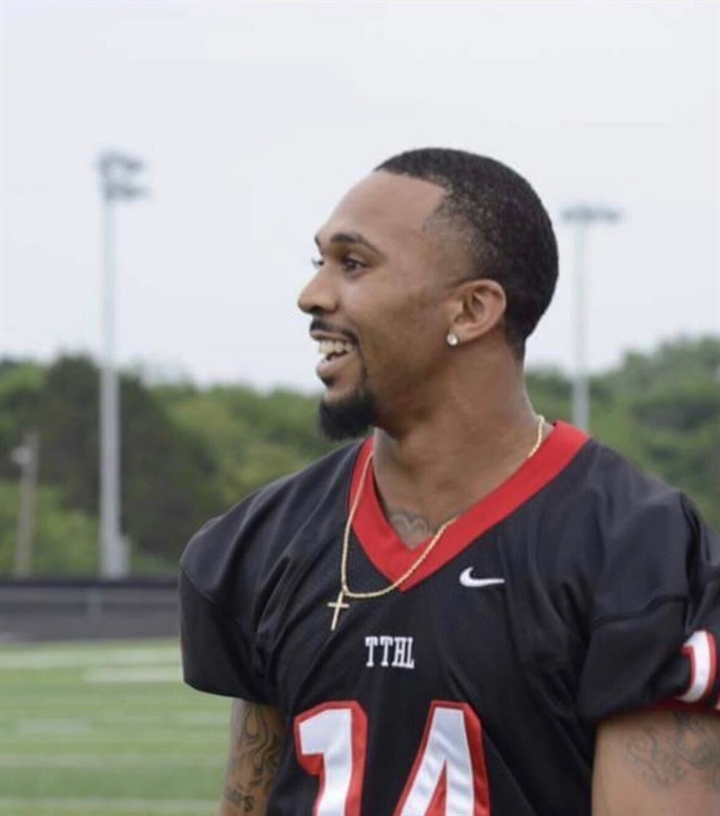
It wasn’t like Cole didn't have role models. He’s quick to cite Lufkin’s Reggie McNeal, who won a state championship in 2001, Dallas Lincoln’s Byron Eaton, who made a state championship in 2004, and Texas’s Vince Young, who won the Rose Bowl in 2005.
But none of them had a story like his, because Cole was never supposed to play quarterback in that 2006 season. McGuire planned to use him at wide receiver, running back, cornerback and even kick returner. That is, until the team’s starting quarterback, Cortney Roberson, got hurt in spring practice and wouldn’t be able to return until mid-season.
When Roberson went down, Cedar Hill played its spring game with two younger quarterbacks competing for the job. Afterwards, in the coaches’ office, offensive coordinator Stephen Hafford came to McGuire with a better idea.
“If we want to get Will Cole the ball so much, let’s put him back at quarterback, because he’ll touch it every play,” Hafford said.
That fall, Cedar Hill scheduled a preseason scrimmage against Ennis. The Longhorns won the live quarter 14-7, a scenario in which the only difference from a game was that the quarterback couldn’t be tackled. McGuire left the stadium a little disheartened. Sure, Ennis had won three state championships since 2000 under legendary head coach Sam Harrell, but the Lions were also in a lower classification. After watching the tape, McGuire called Harrell.
“I don’t mean this disrespectfully, because I know how good you are,” McGuire said. “But what did you see? Because I really thought we were gonna get after y’all.”
“Rewatch the tape and call me back,” Harrell said.
So McGuire pored over the tape again, then rang him back.
“Joey, at what point in that scrimmage would we have ever tackled Will Cole?” Harrell said.
Sure enough, in Week 1, Cole ran for 289 yards against Colleyville Heritage. That night, it was Harrell’s turn to call McGuire.
“I guess Colleyville Heritage couldn’t tackle him either,” Harrell said.
Cole was so dynamic that when he beat teams, opposing coaches became fans rather than resentful. In 2005, when Cole still played wide receiver, Cedar Hill faced Arlington Bowie late in the season. Cedar Hill already had a playoff spot locked, so Criss was shocked when Cole lined up on the sideline closest to him.
“Will Cole, I don’t know why you’re still out here,” Criss barked.
Sure enough, Cole caught a pass a couple of plays later and was laid out, lying motionless on the turf. Criss thought he was knocked out ice cold, done for good. But Cole trotted out to his same spot the very next series.
“Coach, watch this,” Cole said.
He caught a pass, made Criss’ entire team miss, then ran 75 yards for a touchdown. Before he jogged to the sidelines, Cole made a detour to Criss.
“I think I’ll come out now, Coach,” Cole said.
In addition to his speed and athleticism, Cole’s charm was a signature trait. He could trash-talk without ever crossing the line into disrespect. During a walkthrough at the Alamodome the day before the state championship game, Cole walked up to McGuire and sideline reporter Emily Jones.
“Will those things be on during the game?” Cole asked, gesturing toward the two video boards at either end of the stadium.
“Yes,” Jones said.
“Will it be a live feed?” Cole asked.
“Yes,” Jones said.
On the game’s second play, Cole took a QB Counter 70 yards to the house. As he streaked down the field, his eyes were lifted toward the sky the entire way. He was using the Jumbotron as a rearview mirror.
Cole was going to beat you; the amount he wanted to beat you by just depended on how much you pissed him off. McGuire had three state medalists in track on that Cedar Hill team: Anthony Blue, Romie Blaylock and Josh Thomas. Once a week, like clockwork, they’d goad Cole into a race by talking crap. McGuire doesn’t remember Cole losing. He couldn’t lose.
“Will Cole is kind of like this unbelievable, crazy legend,” McGuire said.
The problem for Cole was that after the state championship game, the forces trying to bring him down were no longer wearing shoulder pads. Because now, when he looked up at the Jumbotron, he couldn’t see the immaturity and pride that were swirling in him.
For as fast as Cole was on the football field, it couldn’t compare to the blur of his recruitment process. He did not take any official visits during the season, so he had to cram them all in during the month between the state championship game and National Signing Day.
Cole’s parents were both older. His mother had him at 43 years old. And while they lived under the same roof, they were distant, seemingly only ever coming together to argue. They were unprepared and not unified for the recruitment process. In this gap, Will’s older sister, Briggette Allen, stepped in as his caretaker. She was 17 years older than Will, and had her own daughter just three years younger than him.
Both Briggette and McGuire wanted him to go to Kansas with his high school teammate, Dezmon Briscoe. But Cole’s official visit got snowed in, and he hated the cold. When he visited Oklahoma State, he saw the renovations that would be completed on Boone Pickens Stadium in two years. Barry Sanders was one of his favorite players. He liked the school’s colors. So even though Oklahoma State had come into the process later than Kansas, he convinced himself that all these things drawing him to Oklahoma State weren’t just childhood fascinations, but a sign from the universe.
“It was kind of like how Cedar Hill wasn’t necessarily known for football, but they had the tools to be good,” Cole said. “So I’m thinking I was doing the same thing at Oklahoma State.”
His Signing Day Ceremony was aired on Fox 4 from Buffalo Wild Wings in Cedar Hill. Before he made his decision, anchor Max Morgan asks if he’s ready to get this thing over with.
“It’s really getting old, all these people coming and calling and stuff, I’m really just getting tired of it,” Cole said. “So I’m really now just trying to tell people where I’m going.”
Cole spoke with his signature smile and Texas drawl, but his words conveyed a kid who was overwhelmed by the process and unsure of where to go, as if he were scribbling an answer to the test as the bell rang. And Briggette felt it in her gut that he guessed wrong.
“We still watch (that ceremony),” Briggette said. “When he says Oklahoma State, you see my face, and I just lose all the color possible.”
Cole was recruited by Oklahoma State running backs coach Curtis Luper. But when he got on campus, he decided to play cornerback. He was playing a position he hadn’t in high school, for a coach that hadn’t recruited him. He was set to redshirt as a freshman, but then he saw Briscoe balling out at Kansas, the school he hadn’t picked, in the midst of the best season in program history. So he decided to move back to offense and burn his redshirt. But now it was the middle of the season, and there was no way he could crack the game plan.
He finished with two catches for seven yards and one rushing attempt for three yards. Cole thought it was a lost season then. It ended up being the only yards he ever gained in college.
The next year, in August of 2008, after a fall camp scrimmage, McGuire got a call from Luper.
“Joey, your boy went off today,” Luper said.
Cole, playing slot receiver beside Dez Bryant, had taken a screen pass for 60 yards and returned a punt for a touchdown. Now back at a natural position, he was showcasing the talent that had made him the next big thing coming out of Cedar Hill.
“He’s going to be one of the great players they talk about around here for a long time,” co-offensive coordinator Trooper Taylor said during fall camp.
But a week before the season, McGuire fielded another call from Luper. Cole had torn his ACL, MCL and meniscus in a non-contact drill, one week before the start of what was supposed to be his breakout season. Football is a fickle sport. Two years ago, a spring ball injury brought Cole into the limelight. Now, it had robbed him of it.
“Curtis, do not worry about his knee,” McGuire told Luper. “Worry about him being engaged throughout the entire process.”
McGuire knew that Cole was built like a great white shark. Sharks must swim to push water through their gills. If they stop moving, they lose oxygen and die. Cole always had to be doing something. After a hard practice at Cedar Hill, Cole would go to the gym and shoot baskets for an hour. Before games, when Cedar Hill players had their quiet time in the locker room, McGuire would let Cole play Xbox in his office. Then, he’d put up video game numbers on the field.
All this to say, a blown knee could immobilize him - and kill him.
Oklahoma State wouldn’t allow Cole on the sidelines during the 2008 season; instead, they wanted him to sit in the stands. But Will Cole doesn’t sit in the stands. Now he couldn’t play, practice or even attend games. So he sat in his dorm room, skipping class and his rehab, popping hydros for the pain in his knee and his heart.
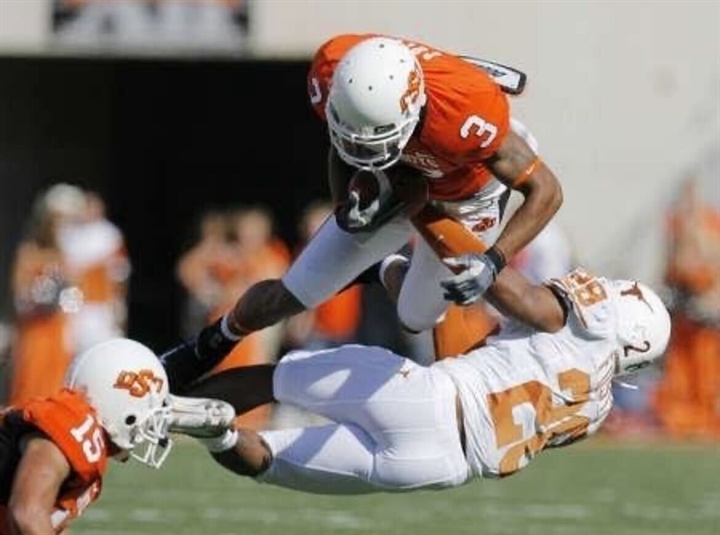
Cole’s laid-back nature was what made him great on the football field. In his senior year, Cedar Hill was down 31-6 to DeSoto with 11 minutes left in the game, a team featuring future NFL Hall of Famer Von Miller. Cole came up to McGuire, tapped him on the butt, and said, ‘I got you, Coach.’ They won that game in double overtime. But his nonchalance also contributed to his downfall. Two seasons without football was an unbridgeable eternity, and he checked out. And there was no longer a McGuire on staff to constantly check in. Oklahoma State had six blue-chip recruits the year prior; Cole was just one of them.
“It’s easy to have fun when you’re with a team that wants you,” Cole said. “This is no offense to Oklahoma State, but I don’t think they necessarily wanted me. I think they just recruited me.”
When head coach Mike Gundy kicked him off the team that December after one too many missed meetings, Cole wasn’t blindsided or hurt. Worse, he didn’t care.
“Mentally, I wasn’t there,” Cole said. “I wasn’t even there to even care if they kicked me off or not. When he kicked me off, I remember just standing up and walking out. I don’t remember even having a comeback to him.”
Oklahoma State moved him out of the athletic dorm and into another building, where Cole began a self-induced solitary confinement. He was too consumed by the depression of his present situation to think about the future.
He says now he should’ve gone to JUCO to play right away, but his pride led him to choose another season on the practice squad at North Texas, just so he could be on a Division I roster. Cole couldn’t be on scholarship because he hadn’t completed enough hours at Oklahoma State. Without football games at Oklahoma State, he wasn’t motivated to go to class. Now, still without football games at North Texas, he didn’t last either.
Cole tried to play at Coffeyville Community College in Kansas and Division II Mary Hardin-Baylor, but was ineligible because he couldn’t provide a transcript from North Texas. He flew to Canada to play for the BC Lions, but was cut after hyperextending the same knee he had blown out in college.
With that, Cole was back in Cedar Hill, now 24, without a college degree. Instead of getting a job, he became a hired gun for flag football teams, working out at the Arlington Park Recreation Center and waiting on calls. There were flashes of what could have been, like when he made the 2018 championship game in the American Flag Football League. Or when he signed onto the Texas Revolution arena team and scored four touchdowns in his debut. But he was kicked off the team after skipping a game to play in a flag football tournament for a bigger cash prize than the $225 game checks he received.
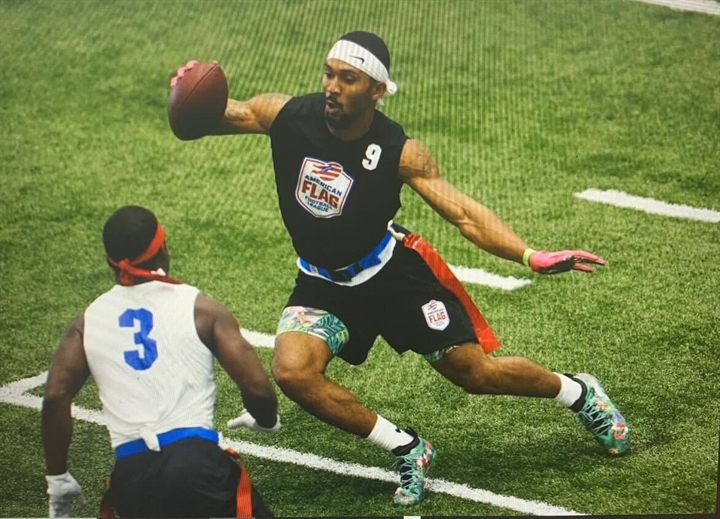
He convinced himself he was running down a professional football dream, but he was really running on a hamster wheel. There would always be another flag football team to play on, another weekend to put off the reality that this wasn’t a career. But the games he actually wanted to play in would never come.
“Yes, you want to chase your dreams,” Cole said. “But at this point, I’m 24. My daughters are four and five years old. My priorities were out of place. Because even though, in my heart of hearts, I felt like I was good enough to play in the NFL, I didn’t look at myself in the mirror and admit that that door was closer to being closed than being open. That was the reality I was afraid to admit to myself.”
There were a couple of reasons Cole couldn’t let go. His mother was a massive football fan. She had recorded all his games since he was a little boy, her voice shrieking behind a shaky camcorder as he broke free. Before his junior year at Cedar Hill, he was actually planning to only play basketball, but his mother convinced him to stay. During that 16-0, his entire family would travel to his games nine deep, donning t-shirts with his name on the back. Those games were the happiest his mother and father had been together.
“Every win, we picked up more people,” Briggette said. “Neighborhood people, people from Dallas, it was like, ‘Hey, Will’s doing it! Where does he play next? Can I get a t-shirt?’”
But now his family was cheering for him to move on, to start the next chapter of his life. And Cole still couldn’t. Because not wanting to disappoint his family was only part of what gnawed at him. The other part that stung was walking around Cedar Hill and people no longer coming up to congratulate him, but rather to ask if he was on drugs. Somewhere along the line, that state championship season morphed from the best moment of his life to a burden.
For years, Cole was a Wilt Chamberlain-type figure. His breakout season came in 2006, one year before the iPhone was released, and before HUDL and social media made highlights go viral. The evidence of that senior season was burned onto DVDs stacked along Cole’s shelf, unable to be fired off in a tweet or text, ensuring the man became a myth.
That myth now lives an ordinary life in downtown Dallas, working here and there jobs to support his family. Right now, Cole is a carrier delivering samples to veterinarians. He’s done warehouse work. In the next six months, he plans to get a CDL license so he can drive 18-wheelers.
He used to think about that 2006 season every day, and stew on all the people who failed him after, most of all himself.
“It took me probably 10 years to forgive everybody, and then look myself in the mirror and say, ‘I’m the reason why I’m in the predicament that I’m in,’” Cole said.
He tries not to live in high school, but there are times he’s drawn to a Cedar Hill football game. Partly, he wants to watch the program he helped build. Cedar Hill has made the playoffs in 15 of 18 seasons since Cole left. But part of him just wants to return to a time when life was less complicated, and the world was at his fingertips, for a couple of hours.
“I go to Cedar Hill to this day, and there are principals that tell me that things ain’t been the same since around that time,” Cole said. “They talk about how things just made sense in my senior year. Everything just clicked, from school, sports, everything.”
The school has been back to the state championship multiple times. But, in a way, it’s still chasing the euphoria that the first run brought. For a long time, too long, in fact, Cole was too.
But in recent years, administrative employees and parents who saw Cole play are no longer the only ones stopping him at these games. Young kids who weren’t even born the last time he wore the red and black will tap him on the back, saying, ‘Aren’t you Will Cole?’ His old highlight tapes are popping up more frequently on YouTube, kickstarting the legend’s second life.
“At the moment of me playing, I didn’t think about it like this,” Cole said. “I never thought once that almost 20 years later, people would still be talking about that year.”
Yet Cole wants people to talk about all the mistakes he made after that year, too, so his story can serve as an example for the next superstar athlete who’s in over his head with the recruitment process.
“Could you imagine Will Cole’s NIL deal if he were playing today?” Criss said. “I’m talking about, this kid is probably worth $3 or 4 million.”
Of course, this is part of the tragedy in Cole’s story. If NIL had existed in 2006, he could’ve had a nest egg to fall back on for the past decade. But he also could’ve blown it. That’s why the story is all the more important now. It’s not that Cole was ever a bad kid who consciously made the wrong decision; he just made the life-altering decisions too casually. And while the Transfer Portal allows current athletes to make a ‘mistake’ in picking their first college, the infusion of hundreds of thousands of dollars can convince them to make a short-sighted decision.
“If I were to have a chance to talk to some kids, I’d let them know that people don’t understand that the decisions right out of high school determine so much,” Cole said.
But he does have a chance. His son is seven years old now. He watches his dad’s highlight tapes on repeat, experiencing with wide-eyed wonder what the state of Texas saw 20 years ago. Those tapes have inspired him to play football this fall, too. He practices his father’s jukes and spins around the furniture in the apartment.
“I think that his son saying, ‘I want to be just like you,’ triggered him one day, and he was like 'Hey, I’ve got to get my shit together,’” Briggette said.
Because, frankly, Cole wasn’t the ‘me’ he wanted his son to be yet. So he officially closed the door on his football dream and started on a new one: preventing his child from falling into the same traps he did.
“I tell him, ‘Maybe all the mistakes came for you. And maybe now you pour into your kids, and you make them stronger in areas that you were not,” Briggette said.
And if he can do that, Will Cole’s story will still be a successful one.
A couple of years ago, Briggette set out to write a book about her brother. But when she first told Cole, he didn’t think he was ready.
“No, you ought to wait until I do something,” Cole said. “Right now, how does my story end?”
Maybe it’s just beginning.
This article is available to our Digital Subscribers.
Click "Subscribe Now" to see a list of subscription offers.
Already a Subscriber? Sign In to access this content.
 Don't Miss Any Exclusive Coverage!