




Corey Borner was about to miss the bus.
He scrambled around his bedroom with an open backpack, tossing his binders, books, and a sack lunch in. Like a two-minute warning where the offense needs a game-winning drive, there was no margin for error. Corey had the biggest practice of his football career that afternoon – a spring scrimmage that would determine whether or not he made DeSoto’s varsity football team as a sophomore. But he wouldn’t even get a chance if he missed the bus. His dad was already at the law firm. His mom would be late for her shift at Baylor Scott & White Hospital if she had to take him to school.
So Corey took the stairs two at a time, shoved his feet halfway into his shoes, and flung the door open with hardly a goodbye. As he sprinted down the sidewalk, his heart soared once he saw his friends were still at the bus stop.
But it sank once he realized he’d forgotten a textbook.
Charlotte Borner was already heated at how late her son was running, but you could’ve seen the steam coming out of her ears once she heard Corey swinging the front door open and bounding up the stairs. She was a little woman, all of 5-foot-nothing, but as Corey always said: “She don’t play.”
“I know one thing, you better not miss this bus,” Charlotte hollered as she stomped up the stairs. “Because if you miss the bus, I’m not taking you to school.”
Since that morning of May 6, 2009, Charlotte has spent every day wishing Corey had missed that bus. That was the last time she ever saw her son run again.
That afternoon, Corey played some of his best football. After another pass breakup from his cornerback spot, he beat his chest, his teammates crowding around him to slap him on the helmet.
“He was playing hard and having a great scrimmage,” DeSoto head coach Claude Mathis said. “The very play before that, he’d made another great play.”
Corey was supposed to be subbed out. But sensing his momentum – and the coaches noticing – he pleaded with his position coach for one more snap. The offense threw a bubble route to the inside receiver. Corey shed the block, meeting the receiver almost as soon as he caught the ball. This would be the perfect cap to his scrimmage: a hit stick in the backfield. He lowered his head and dove.
Almost as soon as the crown of his helmet lodged into the receiver’s ribs, Corey felt a flash of fire in his neck that blazed down to his toes. It was the worst pain he’d ever experienced in his life. His brain told him to get up, but his body lay listless on the turf. Before the head trainer even reached Corey, Claude Mathis was dialing 911. As the trainers started cutting his jersey, Corey looked at his arm and willed it to move. When he couldn’t, the fear that emanated through his body at the implications of why far surpassed the pain.
“God be with me,” Corey murmured. “God be with me.”
If he’s being honest, Corey felt like God had abandoned him for most of the next year. Because as he prayed in the ambulance ride to the hospital, he convinced himself he’d come back to school the very next day on crutches. But the blurry visions as he came in and out of consciousness following a nine-hour surgery put the new reality of his life into full focus. There was a TV in the corner of the post-op room tuned to Fox4, and Corey saw his name on it: ‘DeSoto High School’s Corey Borner Suffers a Spinal Cord Injury.’ Then he saw his mom and dad talking to the doctors outside his room window. Both were crying. Maybe he was still knocked out from the anesthesia, and this was all a nightmare.
Corey had fractured the C5 and C6 vertebrae in his neck. He was paralyzed from the waist down. When Corey learned the diagnosis, he went from saying ‘God be with me’ to ‘God, why me?’ He felt like his life was over at 16 years old. He’d never play varsity football, but he’d also never work, go to the bathroom alone, or walk again.
He vented all his frustrations at his situation, at the world, and at God to his mother as she sat by the bedside. But she stopped him after a couple of minutes. He needed to stop acting like this was something that had happened to him and start believing it was a test he had been chosen for.
“In the hospital, he was saying, ‘Mama, why me?’” Charlotte said. “The first thing I told him was, ‘Why not you?’ I said, ‘God don’t make no mistakes.’ I really believe that whatever happens is for a reason, whether it’s good or bad. We don’t plan or dictate our life, but it's already written from the time you were born. God already did that.”
Corey’s hospital room was flooded with visitors and cameras as he became a national story. Texas head coach Mack Brown and NFL Hall of Fame wide receiver Tim Brown grabbed most of the headlines. But the people Charlotte Borner remembers most in the hospital are DeSoto head coach Claude Mathis and his staff. On the day of Corey’s injury, Mathis went to the hospital after practice. By the time he left, the parking lot was flooded with daylight from the next morning. That was one of several overnight shifts the staff pulled whenever Corey’s parents needed a short break. Corey remembers them still coaching him, saying he needed to be strong for his mother, helping him drink a protein shake to keep his strength up.
“I don’t have any kids that go to DeSoto, but you can’t say nothing about Coach Mathis,” Charlotte said. “Not around me. It all better be good and positive, because if it’s negative, I’m gonna say something.”
One afternoon, DeSoto athletic director Pam DeBorde came to Corey’s bedside. She asked him how he was going to make it through, unsure of the answer she would give if she were in the situation herself.
“Well, Miss Pam, no matter what trials and tribulations I go through,” Corey said. “No matter how hard life is going to get for me, I want to find a way through it.”
When Corey got out of the hospital, DeBorde had wristbands made in bulk with the No. 24, Corey’s football number, and the words he’d spoken to her on one of the lowest days of his life – Find a Way.
Corey returned to DeSoto High School, refusing homeschool in favor of some sense of normalcy. He wanted to talk to girls and dress nice. But most importantly, he still wanted to be part of the football team. With the help of Mathis, DeBorde, and head athletic trainer Scott Galloway, he attended every practice until he graduated in the Class of 2011.
“If it wouldn’t have been for those three, I don’t think I would’ve got through any of this,” Charlotte said.
After graduation, Corey set out to become a motivational speaker. He took three speech classes at Cedar Valley College, then got his bachelor’s degree at the University of North Texas at Dallas. He shares his story with local elementary schools and high school teams – even giving the North Crowley Panthers a halftime pump-up speech during their Class 6A DI State Championship in 2024. He reaches even more people on Instagram, with nearly 100,000 followers.
But the DeSoto Eagles have always been the community he cares most about. Corey is one of three players to have his number retired by the school, along with former Texas Tech All-American Byron Hanspard Jr. and Super Bowl MVP Von Miller. He attends every DeSoto High School home game, sitting in the end zone next to the goalpost. Corey’s found a calling with his voice, but these games are the rare time he hardly talks. He doesn’t do any coaching, but in the game’s tightest moments, when adversity strikes and DeSoto faces the longest odds, the players can find him at the back of the end zone, a constant reminder of how to respond. Just his presence speaks volumes.
“They know that they have motivation down here; if they just look over and see me,” Corey said.
After all these years, not every player on DeSoto’s roster knows Corey’s entire story. Some of the players weren’t even alive when he was injured. But they know the mentality he represents, and they strive every day to live up to it.
“There’s not one time I’ll see him that I won’t give him a hug,” Mathis said. “It’s one of those things where I’m just glad that he’s here. I’m glad that he’s alive. Because that injury could’ve really destroyed him, and it didn’t.”
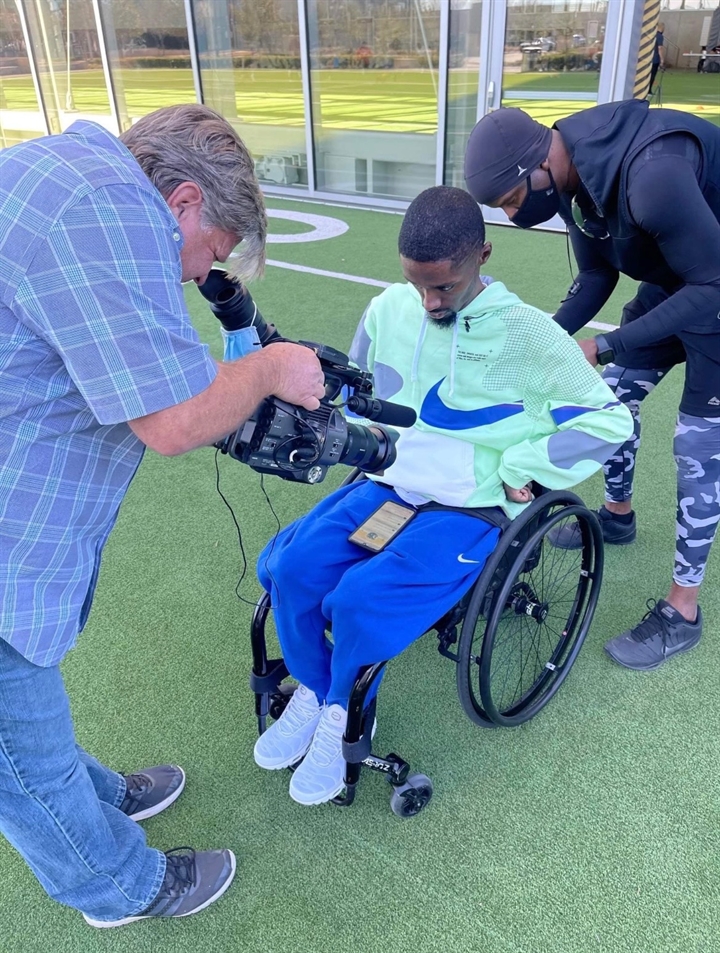
Corey Borner is thriving in a life most people wouldn’t be surviving. And that story has been told numerous times. Corey was featured on Good Morning America when he walked across the stage at his UNT Dallas graduation in an Esko Demo Walking Robot. He’s been on Fox4, NBC DFW, and 97.9 The Beat. But he’s never been written about in Dave Campbell’s, a fact he’s hyper-aware of.
“It’s been a long time coming,” Corey told DCTX. “I don’t think I ever did a story with y’all. What took so long, man? I’ve been here for 17 years.”
He’s right. The story you’ve been reading up to this point has been retold, in some variation, since 2009. And it should be. Because even for the messages that are repeated over and over, it’s always someone’s first time.
“I don’t care how many times you get on the news: not everybody watches the news,” said De’Qualis Waites, one of Corey’s childhood friends. “Not everybody listens to a certain radio station. There are still people who need to hear about that ‘Find a Way’ message. It can help them in their life, their relationship, their career path. Whatever they’re doing, we remind them to find a way.”
But Corey believes that everything happens as part of God’s timing, and he assures me there’s a reason DCTX came to speak to him now – even if it is 17 years late. Because his life changed forever – again – two years ago. And he had to find a way through – again. And he couldn’t have done it without the DeSoto community – again.
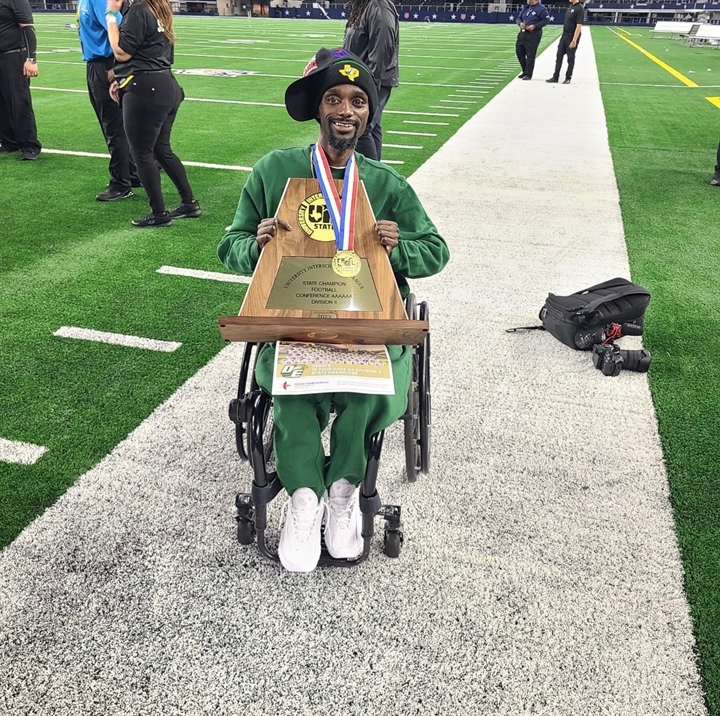
For a guy who can’t walk, Corey Borner sure gets around.
Most days, he’s out of the house by 9:30 or 10:00 a.m., putting his wheelchair in SmartDrive so he can get around without anyone pushing him. As he’s talking to me on the phone, he keeps pausing mid-sentence to say what’s up to someone else sitting on their porch or walking down the sidewalk.
“I don’t think there’s anybody in this subdivision that doesn’t know Lil Corey,” said Freddie Petty, Corey’s longtime neighbor. “I see him everywhere – at football games in the end zone. He’s awesome.”
Mr. Petty has known Corey since he was a 12-year-old kid racing his bicycle up and down the street, but the two have grown closer in recent years. On his daily route, Corey would always stop in front of Mr. Petty’s house, calling him to see if he was home. After a while, Mr. Petty told Corey he better not turn the corner down his street unless he was coming to talk to him. At first, Mr. Petty thought he was being the nice one, because Corey’s situation made him sad. Somewhere in the string of visits, as the two went from neighbors to friends, he realized he was the one benefitting the most from their relationship. Mr. Petty is 70, old enough to be Corey’s grandfather. But Corey’s the one teaching him something every time they talk. Corey’s the one he’s looking up to.
“He can go back to the same playing field that he got hurt on, that changed his life, and he can go back there and smile,” Mr. Petty said. “I think I would be pretty bitter. I’m not sure whether I could be Corey Borner. I don’t think I could do it.”
But, frankly, football hasn’t ever been a painful memory for Corey. He still loved it after the injury, and he’ll love it to his last breath. Football was always a chance to spend time with his father, Michael Borner Sr. In that way, the sport gave him more memories than it ever took away. After his father passed away in February 2024, he’s clinging to them more than ever.
Corey called his dad Memphis Mack, a nickname that stemmed from his childhood in Tennessee. Growing up, Mack was the president of the Oak Cliff Rams Youth Football organization that Corey played for, and Charlotte was the team mom. Every Friday night, Corey and his parents would pile in the van and go to DeSoto’s football game. Corey would sit in the end zone, and Mack would sit with Charlotte in the stands. Just as the DeSoto players looked to Corey for inspiration without him having to say anything, he did the same with his parents, scanning the stands to make sure they were there with him. The next morning, when Mack stepped outside to mow the lawn, Corey would remind him that college football games started at 11:00 a.m. – not noon, like the NFL – so he needed to hurry.
“I’m the captain of this ship, and this grass has got to be cut,” Mack always said.
Once he was done mowing the lawn, Mack would settle into his recliner on the far left side of the couch, his Cowboys cup full of tea always holstered in the cup holder next to him. Corey had his own spot on the right. These days, whenever Corey watches football, he has his mom place that Cowboys cup in the cup holder. Sometimes his uncle comes to watch a game with him, or Charlotte will sit down for a quarter or two. But mostly, that chair stays empty. Memphis Mack might not be there, but he’s ever-present in that room.
“He said, ‘Sometimes, momma, I try to stay looking at the TV straight ahead. I just don’t even want to look to the left,’” Charlotte said. “Because if he looked to the left, that’s where his dad would be sitting.”
There are pictures of Cory and his father in that den. First thing every morning, Corey wheels over to the fireplace, looks up at those pictures, and says a quick prayer to his father. Then he watches First Take, thinking of what his dad would say in response to Stephen A. Smith. By 9:30 a.m., his cup is full, and he’s out the door pouring his positivity out on every person who has the pleasure of crossing paths with him.
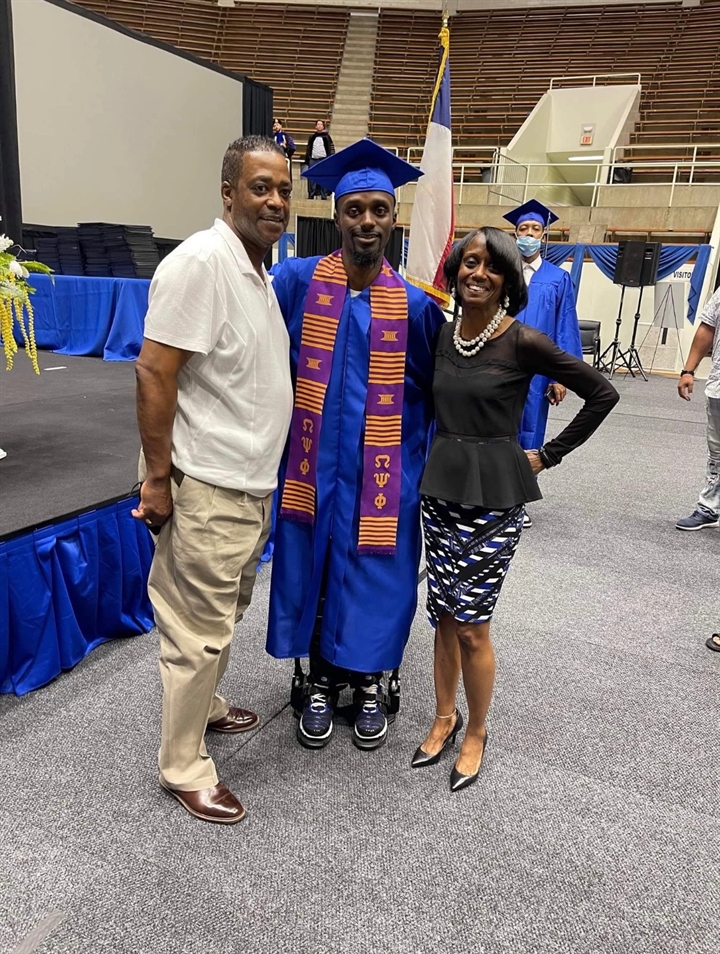
As I’ve reported this story, there are countless reasons I’ve found to admire Corey Borner. But the one I keep coming back to is that his life gave him every opportunity to cry for help, and instead he’s spent it helping others. We should all be tripping over ourselves to serve him, yet he’s the one teaching at Vacation Bible School or speaking at an elementary school, and most of the time, all he gets in return is a thank-you.
Even his support system has waxed and waned over the years. When Corey was first injured, his hospital room was a constant revolving door of teammates. Everyone wanted to be friends with Corey. Hospitals were even reaching out, pitching why he should rehab with them. Charlotte told Corey then that not everybody is your friend. Corey was too young, too pure, to realize what only an adult could know about this cruel world: some people saw Corey as an opportunity for the spotlight. The more time that passes, the more fake friends drop off, revealing the actual small circle that Corey can count on. This phenomenon is occurring at the very moment Corey needs a support group more than ever.
“When you are in the public eye, getting a lot of attention, and famous people are coming to see you that you would never think or dream of, sometimes people want to be around you,” Charlotte said. “Not for the good, but for publicity, or to get in the spotlight. Some people have good intentions. But not everybody.”
But there have been a few, like Mr. Petty, who have wrapped their arms around Corey in his time of need, just as he’s done for everyone else. Corey says that Mr. Petty has become a father figure to him as he navigates the pain of losing his own dad. Mr. Petty is the one who sets Corey up with all the maintenance men who can handle all the household tasks his father used to do. He’s the one who gives Corey advice every young man needs to hear about the dating world. For Mr. Petty, it’s the least he can do to repay all that Corey has taught him. Mr. Petty wears two of Corey’s bracelets, a black one and a camouflage one, on his wrists. They’ve gotten him through more days than Corey will ever know.
“I never take them off,” Mr. Petty said. “There is a spirit behind these bracelets. I know it because of the power behind ‘Find a Way.’ He’s got his name and football number on there. I always wear the bracelet, and it's a reminder every day that I have to find a way.”
But Mr. Petty is not the only one. Every Thursday at noon, Corey goes to his barber, Jeffrey Booker, at Classic Cuts and Styles. Booker is a mainstay in the DeSoto community, a longtime youth football and track coach and uncle to former DeSoto five-star defensive lineman Shemar Turner. Booker did not know Borner personally when he first heard about his story 17 years ago. But after he saw what happened on the news, he wanted to do whatever he could to help.
“I said, ‘If they can give me that kid’s information, let him know that I will cut his hair for free as long as God keeps air in my body,’” Booker said.
Corey’s been coming to Classic Cuts and Styles every week since. After all these years cutting his hair for free, there’s no telling how much money Booker gave up. But, again, he considers himself the beneficiary of this arrangement. Because all those lessons Corey has taught him when he comes into the shop with a smile plastered on his face, despite everything, are priceless.
“I don’t even have the words to say about Corey Borner,” Booker said. “I wish I could make up a word, man. He’s different.”
But Corey’s lifelong friend, De’Qualis ‘Snoop’ Waites, is one of the few people interviewed for this story who knew Booker intimately before the injury. The two were football locker mates at DeSoto West Junior High School, developing a lifelong bond even after Snoop attended South Oak Cliff High School and Corey went to DeSoto. Now they’re grown men, both 33 years old, and as close as ever. Snoop is the owner of The Daiquiri Station – “the best in the nation” – in DeSoto. They serve wings, tenders, burgers, and catfish. But Snoop says the best thing they sell is customer service and energy. Corey plays a crucial role in that, hanging out with Snoop at the Daiquiri Station up to four times a week and talking with customers.
Over the 20 years they’ve known each other, both Snoop and Corey have matured from middle schoolers to full-fledged adults. But the biggest difference Snoop sees today from the kid he met in that junior high locker room all those years ago is that Corey is more positive than he’s ever been.
“When God takes something from you, you start appreciating what you’ve got more now,” Waites said.
Of course, that’s not to say every day is easy. Charlotte has been Corey’s full-time caretaker since 2014. Corey is extremely open, which is why his story is so powerful. But she’s the one who sees him in the most vulnerable moments that even he doesn’t want others to see about himself. There have been plenty of tears shed between the two of them behind closed doors. Those times when the memory of Memphis Mack is too strong, the pain of his absence is too great, and in the void that’s left, both ask why God takes the good ones and leaves some of the others on this Earth.
“It seemed like we were just cheated,” Charlotte said. “He was a hard-working and good man. It just took him so fast. He was diagnosed, and then seven months later he was gone. You’ve got a lot of questions.”
But, as strange as it may sound for a young man who’s been through so much, Corey has always gotten through his hardest days by thinking of those who are less fortunate than him. His best example is a young woman named Kasaiya Woolridge, whom he met when he spoke to her class at Northside Elementary. Kasaiya, born in a wheelchair, came to Corey after his speech with a question that had been burning in her mind.
“Do people make fun of you in a wheelchair, too?” Kasaiya asked.
“They do,” Corey said.
Kasaiya is now in acting classes at Booker T. Washington High School, chasing her dreams, in large part because someone like Corey told her it was still possible. But she also convinced him to keep going just as much as he convinced her to.
“My fight and willpower come from my faith in God, but also from looking at other people who have it worse than me,” Corey said. “You might have a person who was born this way. You might have a person who can’t get out of the house, or can’t even get out of bed. So why should I be complaining?”
He’s talking about his paralysis, but he could very well be talking about his father, too. How many people walk through this life without ever knowing their father? At least he has three decades’ worth of memories that will last him a lifetime.
Last Saturday, Corey and his mother had a garage sale. Mr. Petty came by, not really looking to buy anything, just looking to hang out. He always feels better after talking to Corey.
Before he leaves, Corey asks Mr. Petty if that writer from Dave Campbell’s has called yet. Not yet, Mr. Petty says, but he can’t wait for him to.
“I’m not gonna tell you what I’m gonna say,” Mr. Petty said.
“I don’t want you to tell me,” Corey said. “I want to read it.”
“I’m not sure you want to read what I have to say, Lil Corey,” Mr. Petty said, and both of them burst out laughing.
But the truth is, Corey does need to hear what Mr. Petty and everyone interviewed for this piece have to say. He has to know what his closest circle thinks of him, what he means to them. Because on the days when his dad’s death and his paralysis weigh heavily on his heart, that’s what will keep him going.
Before I hang up with Corey, I have to ask him what he thinks about DeSoto’s football team this year. He says they’re going to state again. Which reminds him that when that happens, he needs two sideline passes for AT&T Stadium – one for him and one for someone to wheel him. I hem and haw a bit, admitting I don’t really have the power to give those out.
“Mr. Yates, we’re gonna find a way,” Corey said.
That’s when the force field of Corey Borner wraps its arms around me for the first time. I came to realize, like thousands of others who’ve come in contact with him before me, that if he found a way through all this, I have no excuse not to.
This article is available to our Digital Subscribers.
Click "Subscribe Now" to see a list of subscription offers.
Already a Subscriber? Sign In to access this content.
 Don't Miss Any Exclusive Coverage!